Practical Information

Practical Information
Make sure to reach our Museum Information Desk, where you can buy guidebooks and other materials regarding the history of the German Nazi death camp in Bełżec. The admission is free of charge.

Check the opening hours for the summer and winter season:

April - October9:00-18:00
Last admission before 17:00
November - March9:00-16:00
Last admission before 15:00

Proper Preparations

When planning your visit, decide in advance whether you’d like to explore the museum on your own or with a guide. Please note that guided tours are paid and require prior booking.

If you’re planning a self-guided visit, there’s no need to purchase a ticket or make a reservation—just check the opening hours and come at a time that suits you. Admission to the museum is free.

Part of the visit takes place outdoors, so be prepared for changing weather conditions.

The museum does not offer a cloakroom or luggage storage.

Due to the nature of the site, we do not recommend visiting with children under the age of 14.
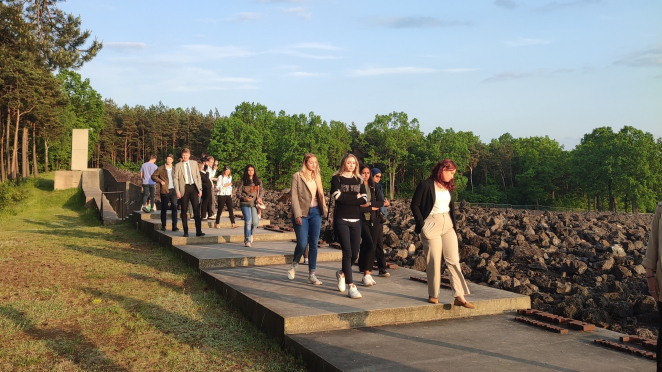
A group of young people walk down a set of concrete stairs, passing a vast field of dark, jagged stones. A forest stretches along the left side, and a concrete wall can be seen in the distance.

Where to begin my visit?

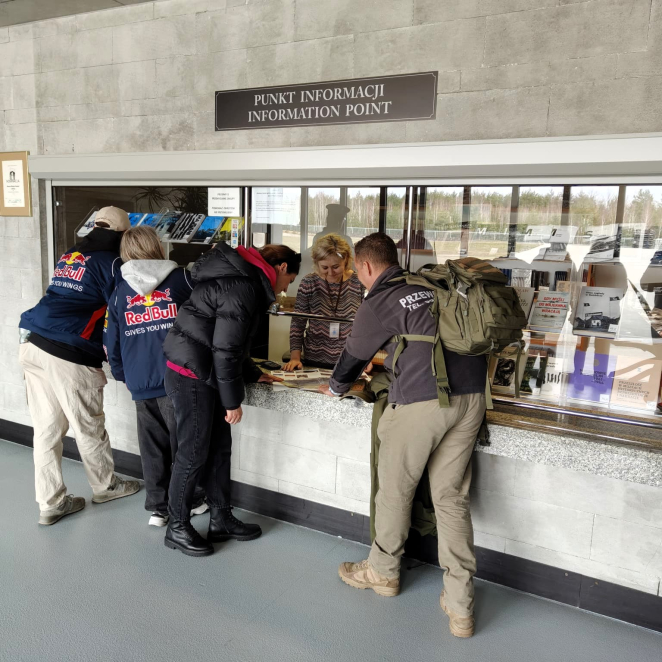
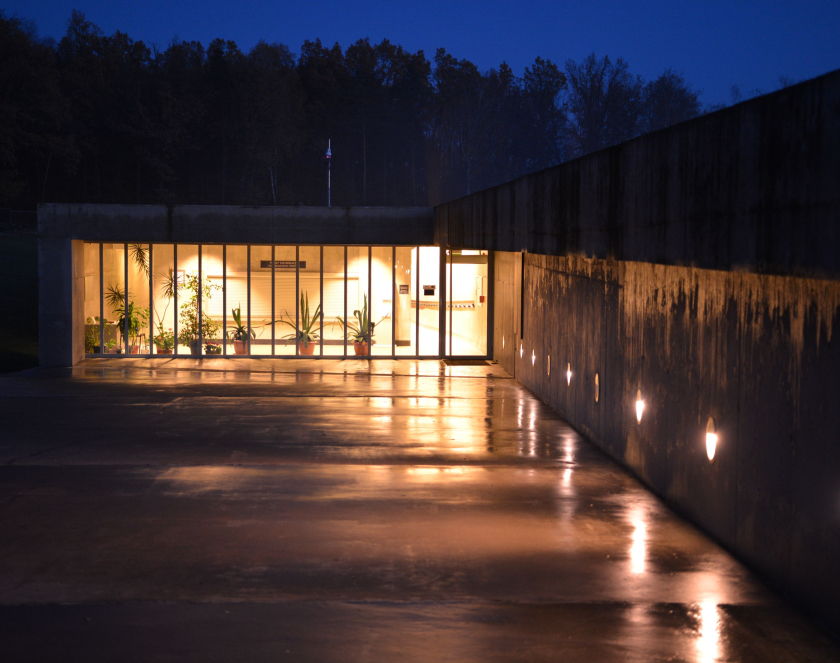
Start your visit at the Museum Information Point, where staff will provide guidance on how to explore the site. You’ll also find a bookstore there, offering a site map to help you navigate the museum grounds, as well as publications on the history of the German Nazi extermination camp in Bełżec.

To better understand the history of the camp, you can download a free mobile app to your phone. It includes descriptions of key locations, eyewitness accounts, as well as archival photographs and documents.

If you have booked a guided tour in advance, your guide will be waiting for you at the Museum Information Point.

During your visit to the Museum and Memorial Site in Bełżec, please behave with appropriate respect and dress suitably for a place of remembrance and a burial site. Among other rules, animals are not permitted (except for assistance dogs), and smoking, including e-cigarettes, is prohibited. Before your visit, it is recommended to ознакомиться with the Visitor Regulations.

Four tourists with backpacks (two of them wearing Red Bull jackets) are standing at the information desk, talking to a staff member.

Can I come by car and where can I park?

The Museum and Memorial Site in Bełżec is located on the south-eastern edge of the village of Bełżec, along national road no. 17 (DK17), which forms part of the international route from Warsaw towards the Polish–Ukrainian border crossing in Hrebenne. It can also be reached via regional road no. 865 (DW865), coming from Kraków through Rzeszów and Jarosław.

If you’re planning to arrive by car, you can drive directly onto the museum grounds, where a large parking area is available. A one-time fee is charged for entry and parking, depending on your vehicle: 5 PLN (cars), 40 PLN (coaches), 15 PLN (minibuses), or 5 PLN (motorcycles).

Travelling by bike? You can leave it free of charge at the designated bicycle racks during your visit.

 
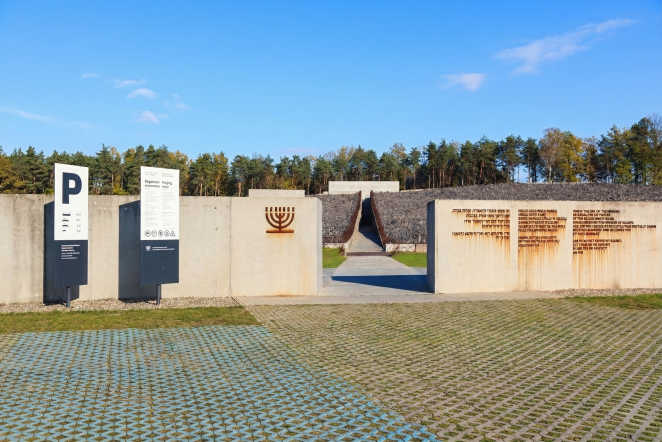
A front view of the museum entrance, featuring concrete walls, informational panels, and a menorah symbol.

Can I reach the Museum by public transport?

You can reach the Museum by:

Minibus (bus):

Train:

Can I take photographs during the visit?

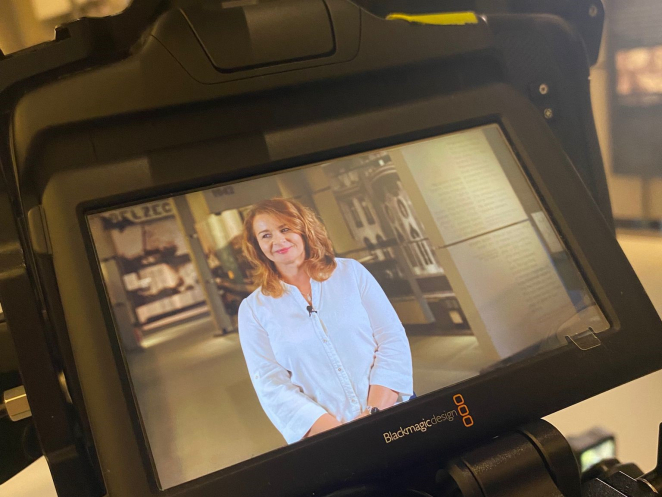
You can freely take photos for your private use. If you plan to use the photographs or recording for distribution or commercial purposes, you must obtain a permit. Please contact the Museum and check the Filming and Photographing regulations.

A behind-the-scenes view of a Blackmagic Design film camera, with its screen showing a red-haired woman in a white shirt smiling while being filmed.

Can I lay flowers or light a candle during my visit?

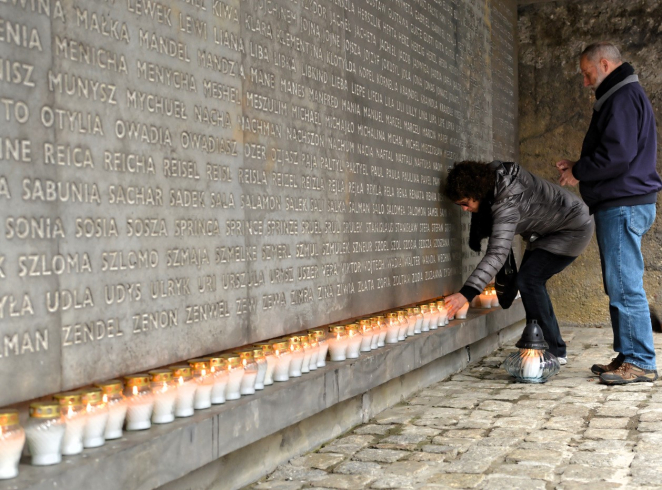
Laying flowers or lighting candles is a meaningful expression of remembrance for the victims of the extermination camp in Bełżec. You can do this at the Ohel Niche. An ohel is a type of Jewish tomb (a small chapel), most often in the form of a rectangular structure. On the polished concrete walls, opposite the Stone Wall, there is a composition made up of names symbolizing those who were murdered.

A woman bends down to light a candle next to a long row of burning lanterns arranged along a concrete wall engraved with names, while a man stands beside her.