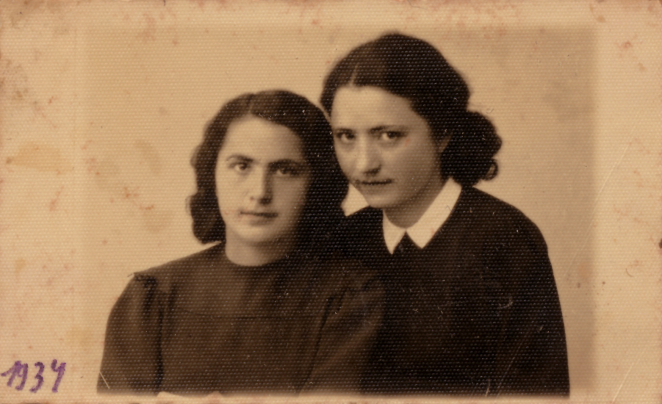
As part of extermination policy adopted in the GG, all Jews would be concentrated in ghettos and then deported to special centres and killed in gas chambers. Such camps were established in Bełżec, Sobibór and Treblinka as part of the “Operation Reinhardt”. Simultaneously, it was planned to plunder Jewish property. It was ordered to deport Jews capable of work to labour camps, including concentration camp at Majdanek.
"Aktion Reinhardt”
Extermination of Jews in the General Government
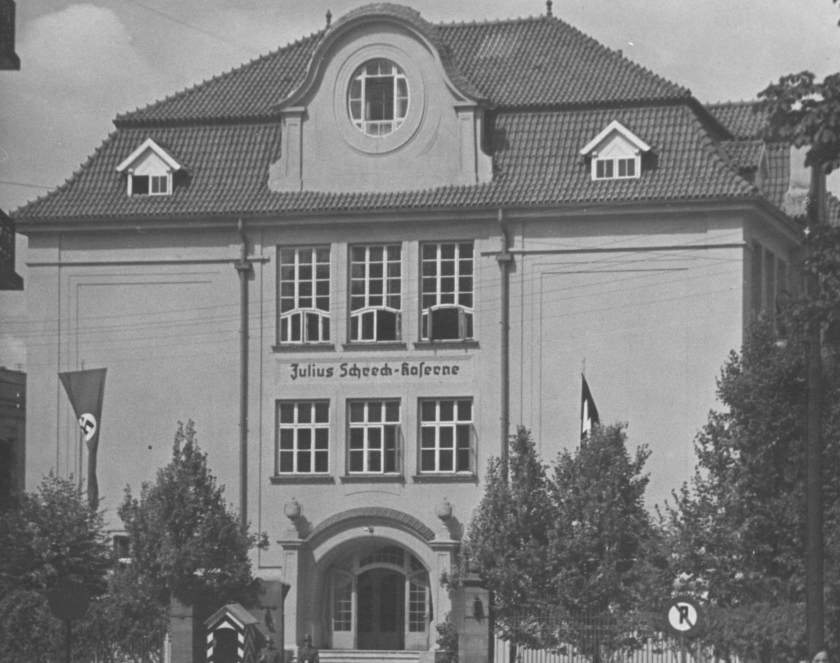
The code name "Operation Reinhardt” was used in the context of the Holocaust not earlier then by June 1942, when the extermination of Jews had already been lasting. It was introduced to pay tribute to Reinhard Heydrich, the chief of the Reich Main Security Office (RSHA) and one of the main executors of the plan to exterminate all Jews being under German control, who was shot by the Czech resistance movement.
Decision-making process
Decision to exterminate all Jews residing in the GG was most probably made already at the turn of September and October 1941. The plan to murder all Jews in the GG was another, this time final, stage of the mass extermination of Jewish people that started in the Nazi occupied pre-war Polish borderlands and territory of the Soviet Union. In the summer of 1941 it took on the total nature. Mass murders perpetrated in the East demonstrated that Nazi Germany was prepared to the “solution of Jewish question” in the whole occupied Europe, especially in the occupied territory of Poland having the largest Jewish population. Reichsführer SS Heinrich Himmler made Odilo Globocnik, the head of the SS and Police in the Lublin district, responsible for extermination of Jews in the GG. He was given the task not only to establish death camps, starting from the grounds of the Lublin district, but also to deport Jews there and to take over the victims’ property. The plan to exterminate all Jews on these grounds was related to Germanization process conducted firstly in the Lublin district and then in the whole General Government. Jews were the first population to perish from these grounds. Establishing the death camps, in Bełżec and then in Sobibór, was at the same time related to the German plans of resettling Jews from the Reich, the Protectorate of Bohemia and Moravia and Slovakia to the East.
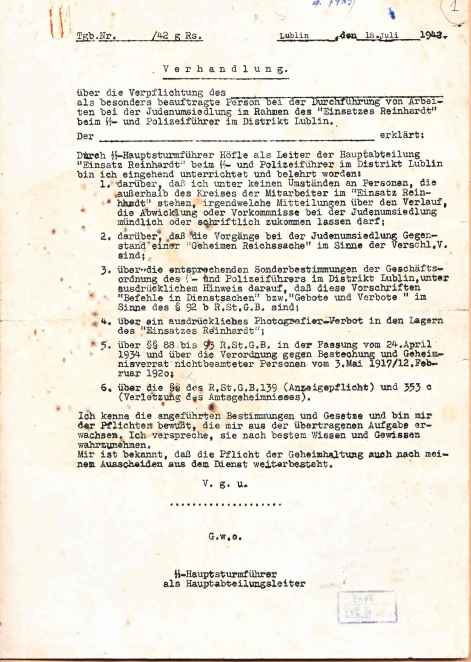
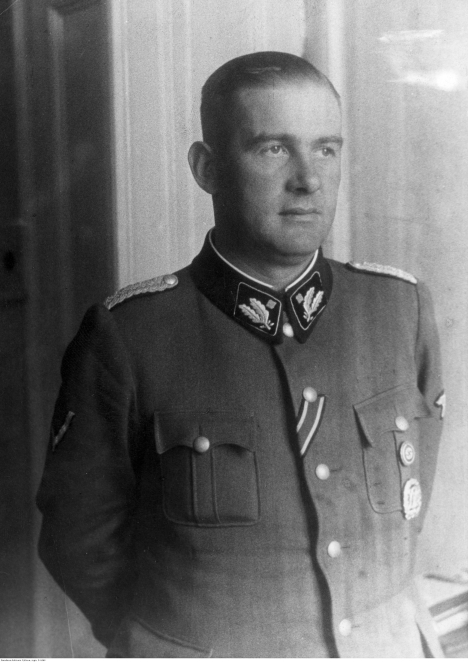
In the autumn of 1941, Odilo Globocnik organized headquarters of the operation in Lublin. In the climax of deportations, 450 SS officers, including 92 crew members transferred from the Führer’s Office and working in three death camps – Bełżec, Sobibór and Treblinka, took part in this genocidal undertaking. These SS-men carried out the “euthanasia” action in Germany in September 1939 – summer 1941and they were supposed to introduce similar killing methods in the death camps in the General Government, this time on a large scale. In the Globocnik’s headquarters, Hermann Höfle was responsible for the transportation logistics, Georg Wippern for the plunder of property, and Georg Michalsen for administrative issues, in other words for exploitation of selected Jewish labour force. The headquarters were located in the Julius Schreck’s Barracks. Regarding preparations for the extermination of Jews, an SS training camp was organized in Trawniki in the autumn of 1941. Its aim was to prepare auxiliary guard units – SS-Wachmannschaften. They were recruited from the former Soviet prisoners of war, who decided to collaborate with the Germans. Their tasks included service in death and labour camps, escorting Jews during deportations, active participation in liquidation of ghettos and mass executions. It is estimated that 3,000-5,000 people, mainly from Ukraine, Lithuania and Latvia, went through the camp.
As the mass murders started, a base coordinating the transports and plunder of property was organized in Lublin. In the former Lublin Aircraft Factory (Plage & Laśkiewicz) on Wrońska Street, the labour camp, the so called Flugplatz, was established. There were located the main warehouses of stolen property. Some Jewish prisoners selected them prior to dispatch to the Reich. The city housed also warehouses of valuables and money (Chmielna Street), plundered medicines, cosmetics and artificial limbs (the former Keindl’s factory at Wieniawa) as well as the warehouse of valuables and personal belongings on Chopin Street (Library of the Catholic University of Lublin). The concentration camp at Majdanek housed the central warehouses of plundered shoes.
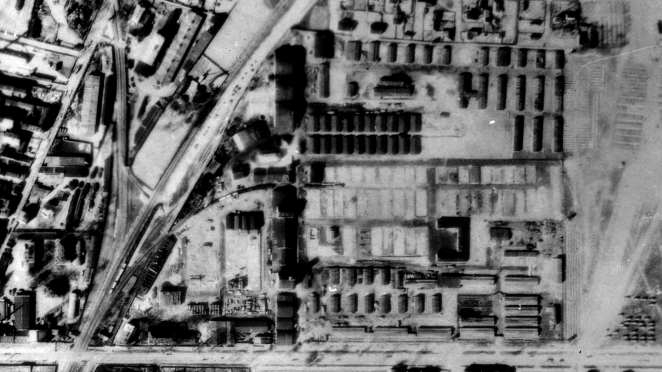
Extermination of Jews in the GG started in Lublin on March 16-17, 1942. At the beginning deportations covered Lublin, Lvov and parts of the Lublin and Galicia districts. During the first phase of the operation over 60,000 Jews were sent to the death camp in Bełżec. Several thousands of people were executed in separate towns, especially in the Galicia district. Mass executions constituted an inherent part of the operation. People deemed by the Germans as “not fit for transport” were shot – i.e. the elderly, decrepit, infirm and orphans. Sometimes the whole Jewish societies living at a distance from railway lines were killed on the spot.
As the mass executions of Jews started in the eastern parts of the GG, transports of resettled Jews from Germany, Austria, Bohemia and Slovakia arrived to the Lublin district. At first they were settled in transitory ghettos in: Izbica, Piaski, Rejowiec, Opole Lubelskie, Końskowola or Międzyrzec Podlaski. Beforehand Polish Jews living in the towns were deported to the death camps. Foreign transports got also Włodawa, Zamość, Kraśniczyn, Siedliszcze, Chełm and Dęblin.
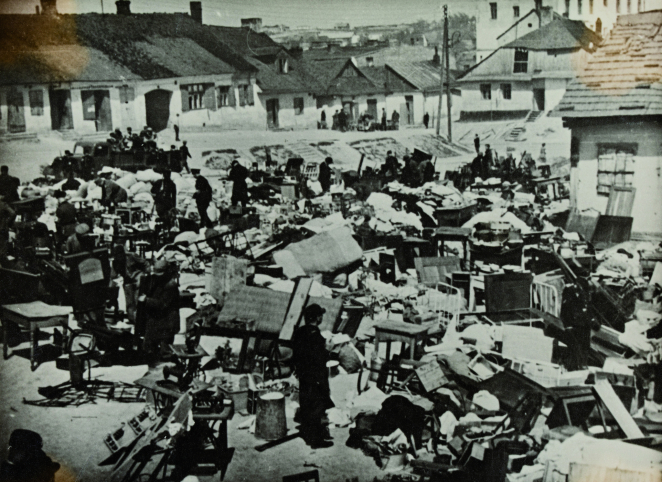
In April 1942 the death camp in Sobibór started operating. At first only transports from the Lublin district were directed there (Puławy, Krasnystaw, Chełm and Biała Podlaska region). Starting from May 1942 also transports with foreign Jews were reaching Sobibór: from the Reich, Austria, Protectorate of Bohemia and Moravia and Slovakia. During selections carried out in Lublin the SS was choosing men capable of work and incarcerating them in the concentration camp at Majdanek, the others were sent directly to Sobibór, bypassing transitory ghettos. Another wave of transports from foreign countries directed to this camp took place in the winter of 1943. About 30,000 Jews from the Netherlands and 5,000 Jews from France were deported there. The last transports to Sobibór included Jews from Vilnius, Lida and Minsk.
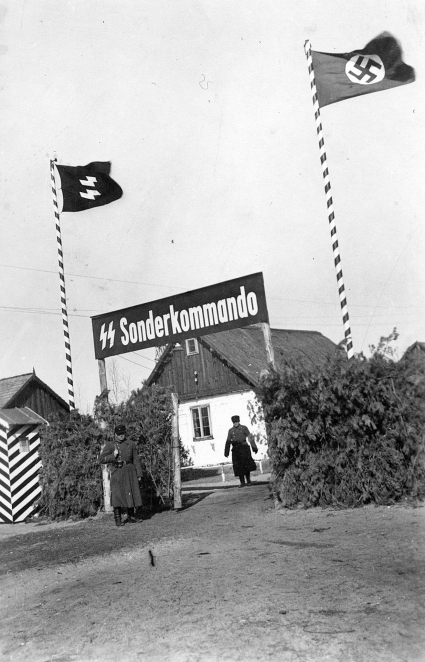
In April and May 1942 Himmler decided to speed up deportations from ghettos to the death camps. Until the end of the year, all Jews incapable of work were supposed to be annihilated. It was ordered to direct the fit for work to labour camps, especially in the Lublin region. The concentration camp at Majdanek also fulfilled such a function. These camps were personally controlled by Globocnik.
In July 1942, regarding the order to liquidate the Warsaw ghetto, the largest Jewish population in the GG, started the new phase of the “Operation Reinhardt”. The third and the largest death camp was established in Treblinka. Transports from Warsaw, the Warsaw district, Radom district and Białystok region (outside the General Government) were directed there.
The largest influx of deportations was recorded in August and September 1942. In August, the most murderous month of “Operation Reinhardt”, over 300,000 Jews were killed in Bełżec and Sobibór. At the same time about 300,000 Jews from Warsaw were exterminated in the death camp in Treblinka. Tens of thousands of Jews were directed to Treblinka also from other parts of the GG, including the Lublin region. Among the victims of the camp there were also foreign Jews from Germany, Protectorate of Bohemia and Moravia, as well as Macedonia and Greece (1943).
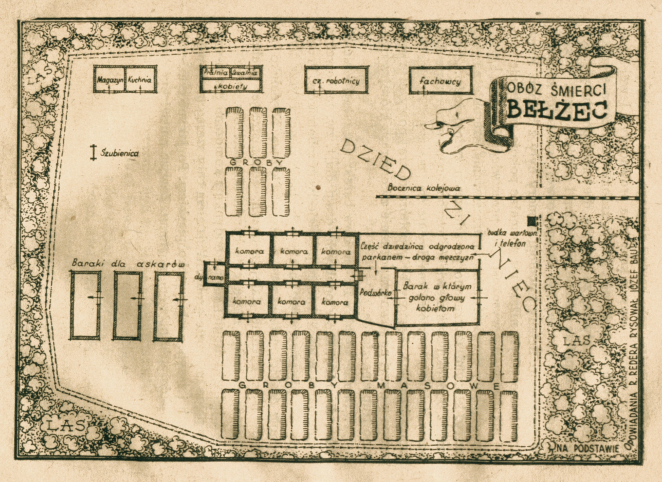
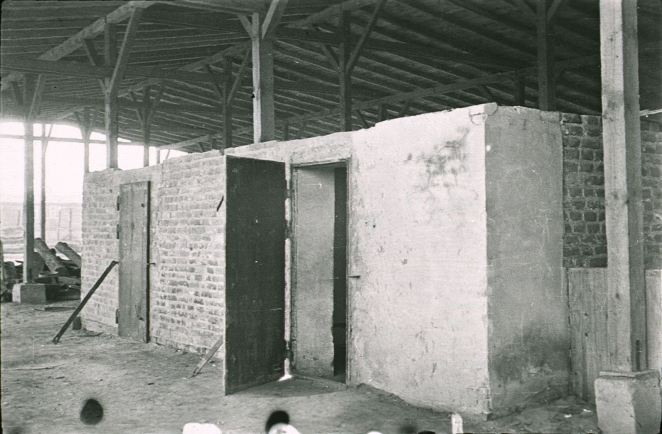
In the autumn of 1942, gas chambers were installed in the concentration camp at Majdanek. Thus KL Lublin became another extermination centre. The killing process was intensified at Majdanek in April and May 1943, after the final liquidation of the Warsaw ghetto, and in August 1943, after the liquidation of the Białystok ghetto. Although they were in the transports to Sobibór, also selected Jews from the Netherlands and France reached Majdanek.
As the operation was being conducted, more and more manifestations of active resistance were taking place. Knowledge about the scale of deportations and places they were conducted in was becoming more and more overspread among Jewish people. Jews endangered with deportations were seeking rescue from the outset. They tried to hide in the woods or on the “Aryan side” and to build shelters in ghettos. Others were jumping out of trains to the death camps. At the end of 1942, when the awareness of the deportees’ fate became common, dramatic attempts to organize the resistance, obtain arms and prepare for fighting took place. Revolts were breaking out in ghettos, especially uprisings in the Warsaw ghetto (April 19, 1943) and Białystok ghetto (August 15, 1943), as well as attempts to incite revolts in the Lvov ghetto (June 1943) and in Częstochowa (June 1943). Apart from that prisoners of the death camps in Treblinka (August 2, 1943) and Sobibór (October 14, 1943) rose in rebellion. It was largely due to the Jewish resistance that Himmler ordered the final ending of the “Operation Reinhardt”. According to his order, after the uprising in the Sobibór death camp all Jewish prisoners residing in the Lublin district would be killed.
It was carried out as part of the Operation “Erntefest” [Harvest Festival] on November 3 and 4, 1943. During those two days over 42,000 Jews were executed by firing squads in the concentration camp at Majdanek and in the labour camps in Trawniki and Poniatowa. These were mainly residents of the Warsaw ghetto deported to the Lublin region.
Following the "Operation Reinhardt” the majority of its executors was transferred to Triest. Globocnik had already been there since August/September 1943 due to his conflict with German civil authorities in the Lublin district. Only few perpetrators of the “Operation Reinhardt” were held responsible for extermination of Polish and foreign Jews.
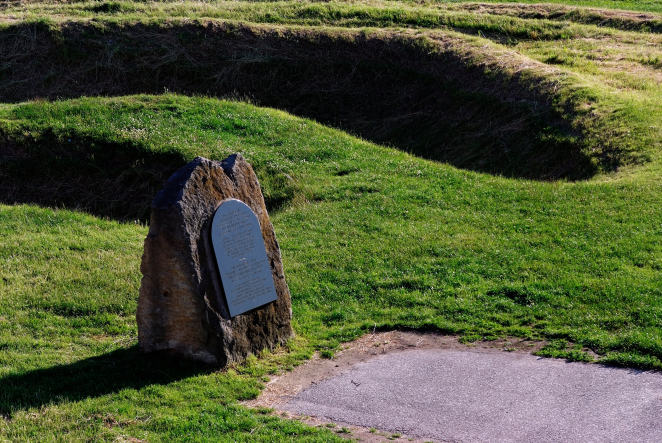
Total numbers of victims in the individual camps are following: 440,000 dead in Bełżec, 170,000 dead in Sobibór and 800,000-900,000 dead in Treblinka. In the concentration camp at Majdanek died or were killed another 60,000 Jews. Tens of thousands of Jews were murded during the liquidation of ghettos, during selections in the labour camps and round-ups in villages and woods. Only few managed to survive the war.