German Extermination Camp in Bełżec

History and Relics

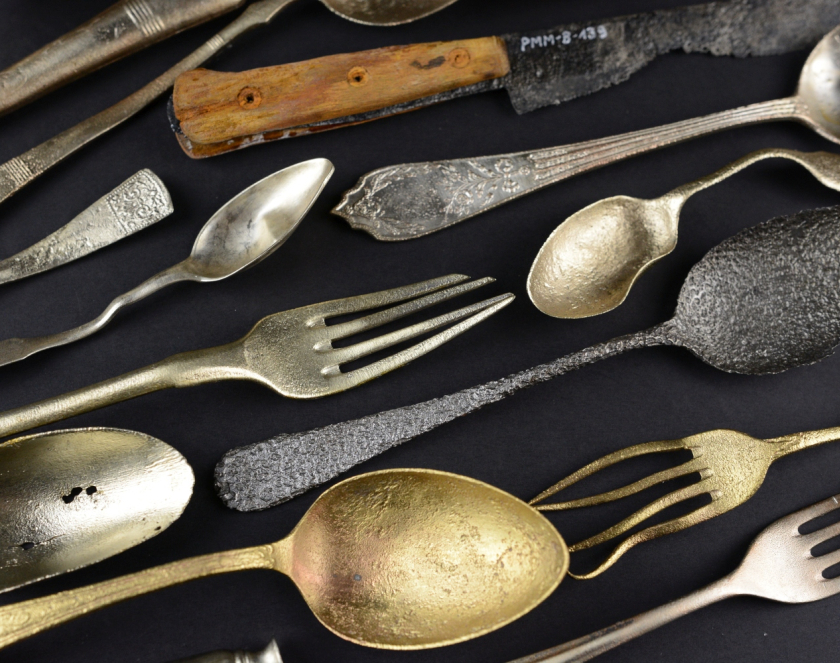
A collection of damaged, rusted, and bent cutlery (spoons, forks, and a knife) found on the grounds of the former Nazi-German death camp in Bełżec, arranged on a dark background
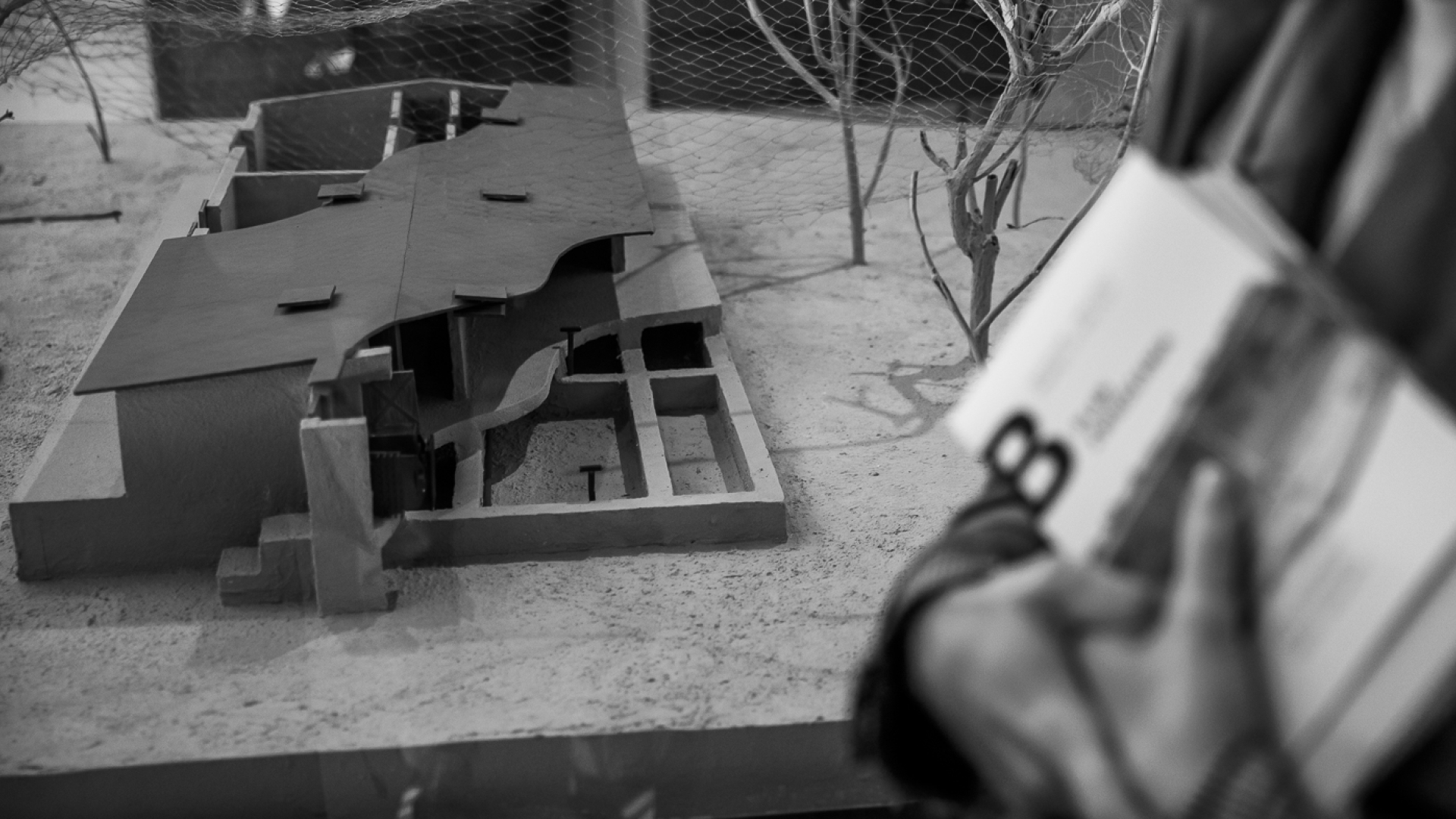
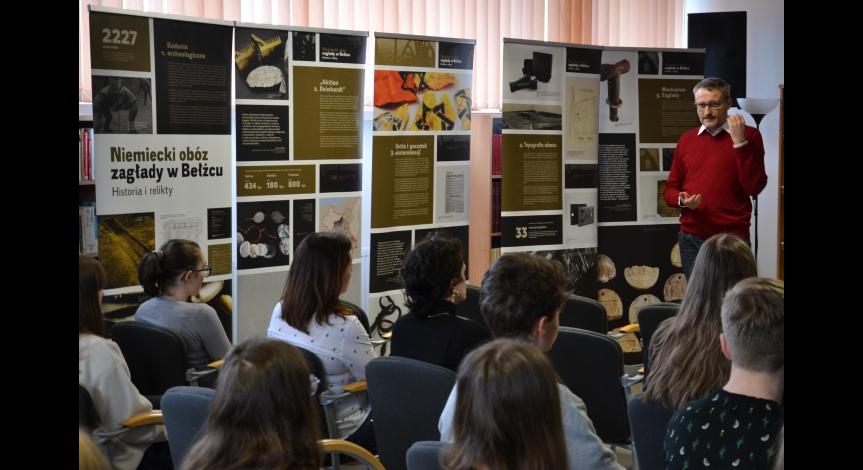
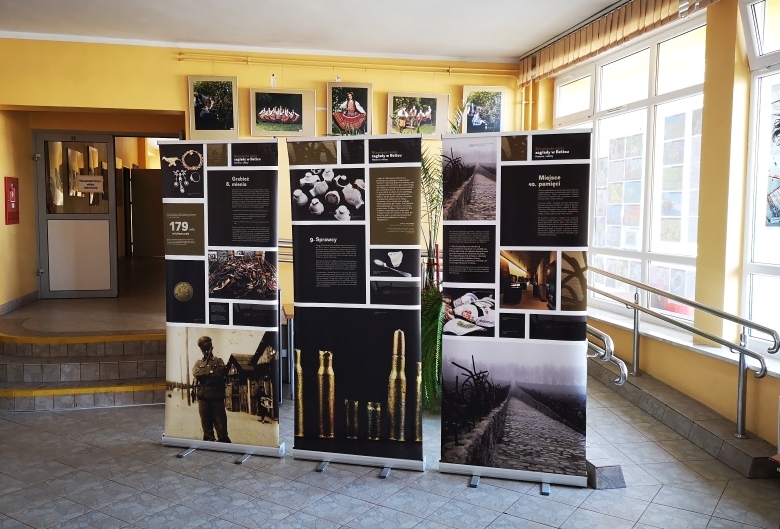
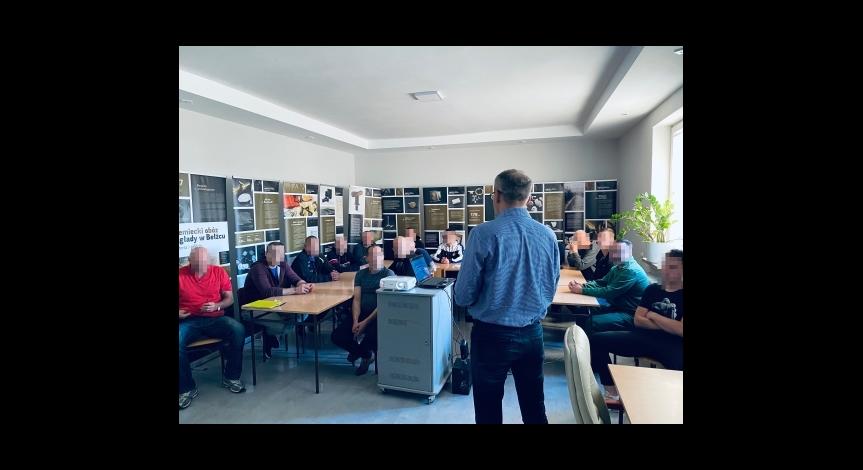
The exhibition “German Extermination Camp in Bełżec. History and Relics" sheds light on the tragedy of this place through the medium of unique archaeological findings. The display documents the history of the SS-Sonderkommando Belzec, presenting photographs of relics excavated from the ground during the works preceding the construction of the museum. These small objects, shown in the context of various aspects of the camp’s operation, serve as a poignant testimony to the fate of the more than 434,000 people murdered there.

Important information

Temporary exhibitionArchival
  • Exhibition date:27.01.2020 - 31.12.2020
  • Place:Museum and Memorial in Bełżec
  • Scenario:Tomasz Hanejko, Jarosław Joniec
  • Language Version:Polish
  • Artistic design:Ewelina Kruszewska
  • Stylistic editing and proofreading of texts:Dorota Niedziałkowska
  • Exhbibition concept and consultations:Wiesław Wysok, Dariusz Libionka

Ghettos and the Beginning of Extermination

Nazi Germany established approximately 400 ghettos in the occupied Polish territories, and the process of isolating the Jewish population in the General Government accelerated significantly at the turn of 1940 and 1941. The starvation and epidemics prevailing in the enclosed districts led to high mortality rates, which constituted a deliberate stage in the extermination of the imprisoned communities. This transitional phase preceded the final liquidation of Jewish settlements and mass deportations to extermination centres, including the camp in Bełżec.

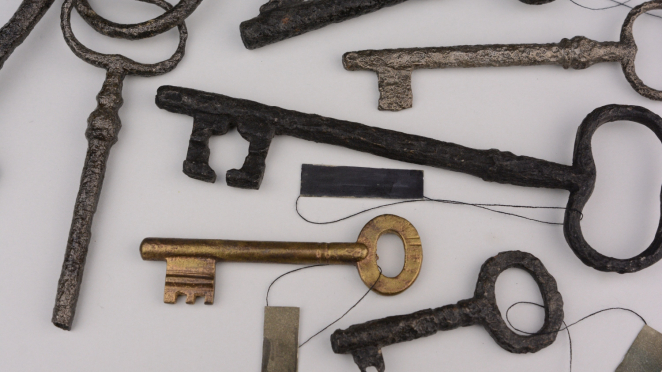
A collection of old keys, most of which are heavily corroded, set against a light background. The items have inventory tags attached to strings, and among them is one better-preserved brass-coloured key.
VICTIMS’ APARTMENT KEYS

The Extermination of Jews in Bełżec

Bełżec marked the end of Jewish communities whose histories often stretched back 800 years. Jews were deported here from Lublin, Kraków, and Lviv – major centres of economy and culture. Sages and ordinary people, representatives of the small-town Galician intelligentsia, Jewish artisans from small and larger towns, beggars and bankers – all were brought to Bełżec on their final journey.

Miles Lerman – a Holocaust survivor and the initiator of a proper commemoration of the victims murdered at the extermination camp in Bełżec

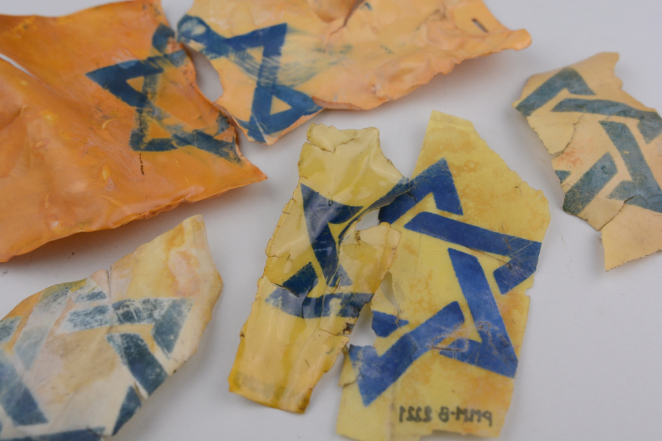
Six frayed pieces of yellow fabric with a blue Star of David printed on them, arranged against a light-coloured background. A handwritten inventory number is visible on one of the pieces.
FRAGMENTS OF ARMBANDS WITH THE STAR OF DAVID. IN ACCORDANCE WITH HANS FRANK’S ORDER OF 1 DECEMBER 1939, ALL JEWS OVER THE AGE OF 10 WITHIN THE GENERAL GOVERNMENT WERE OBLIGED TO WEAR THEM.

Perpetrators

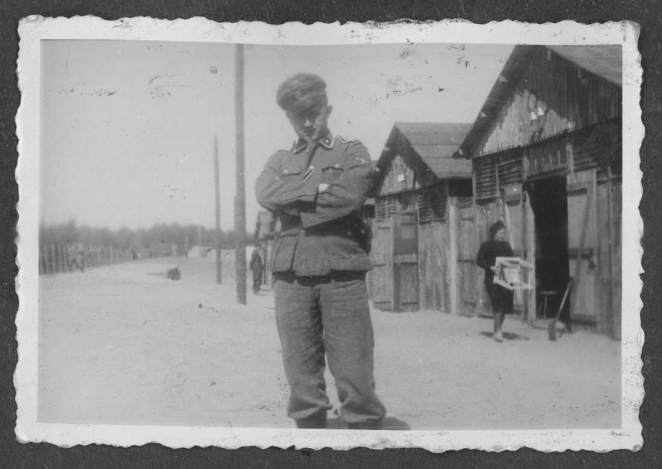
The SS-Sonderkommando Belzec garrison consisted of SS officers headed by commandants that were responsible for all matters related to the functioning of the camp. This function was successively held by Christian Wirth and Gottlieb Hering. Approximately 20 SS-men served at one time. In total, 37 names of garrison members have been identified; they were Germans and two Austrians.

In the foreground stands a man in a German military uniform – of the SS – with his arms crossed over his chest and his cap pulled down over his forehead. Wooden barracks are visible in the background. To the right, in the distance, a woman can be seen carrying a stool. On the left, a row of wooden posts stretches out, and the ground is sandy and devoid of vegetation.
SS-SCHARFÜHRER RUDOLF KAMM, SUDETEN GERMAN AND MEMBER OF THE CAMP GARRISON. HIS DUTIES AT THE EXTERMINATION CAMP IN BELŻEC INCLUDED, AMONG OTHER THINGS, SUPERVISING A PRISONER UNIT SORTING PROPERTY TAKEN FROM THE VICTIMS.

Plunder of Property


The plunder of property belonging to the victims was a key aspect within the operations of the death camp in Bełżec. As in other killing centres, the Jewish deportees had everything they owned taken from them: clothing, suitcases, personal belongings, money, and other valuables. Clothing was thoroughly searched for any hidden valuables. The removal of Jewish stars from the clothing was a particular priority. Most of the work involved in sorting personal belongings and textiles was performed by prisoners on site.

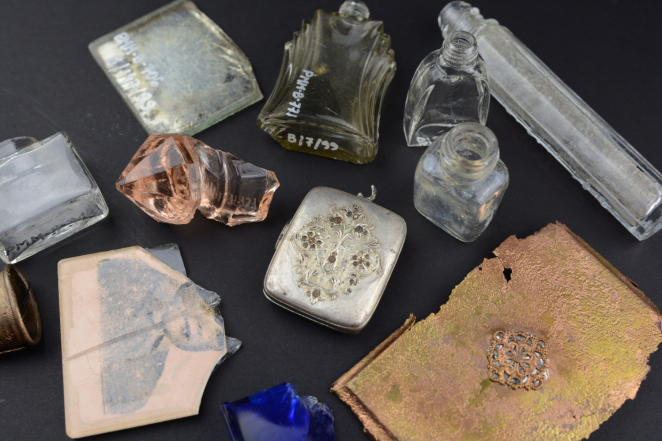
Small objects against a dark background: glass vials, fragments of coloured glass featuring a photograph of a child, a silver casket, and a corroded decorative metal plate with a rosette.
SMALL PERSONAL ITEMS, INCLUDING A FRAGMENT OF A MIRROR WITH A PHOTOGRAPH OF A CHILD, A CIGARETTE CASE LID WITH A ROSETTE, AND A DECORATIVE MEDALLION.