Res Non Humana – An Inhuman Act

German Occupation of the Zamość Region 1939–1944

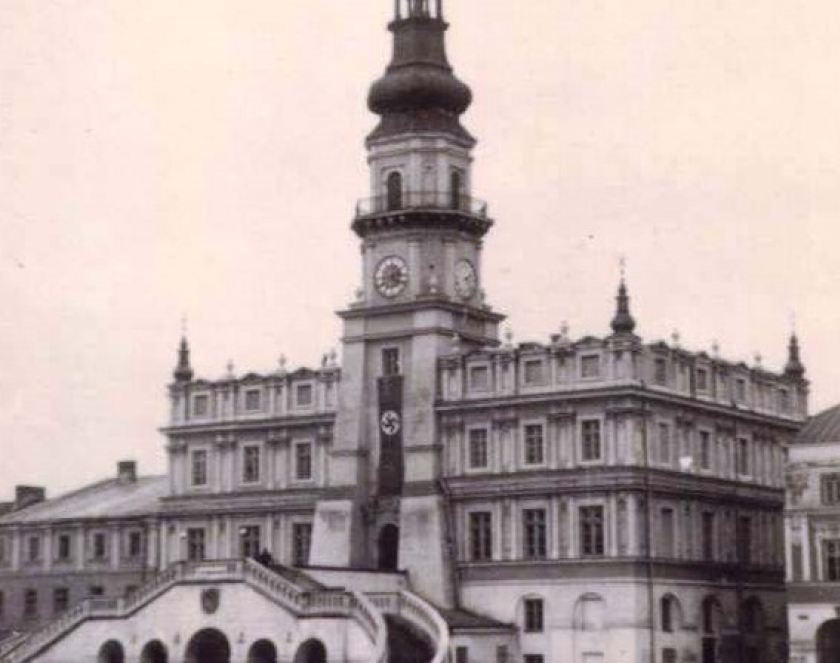
The black-and-white photograph shows the Town Hall in Zamość during the German occupation in World War II. A vertical flag with a swastika is hanging on the façade of the tower, directly above the entrance.
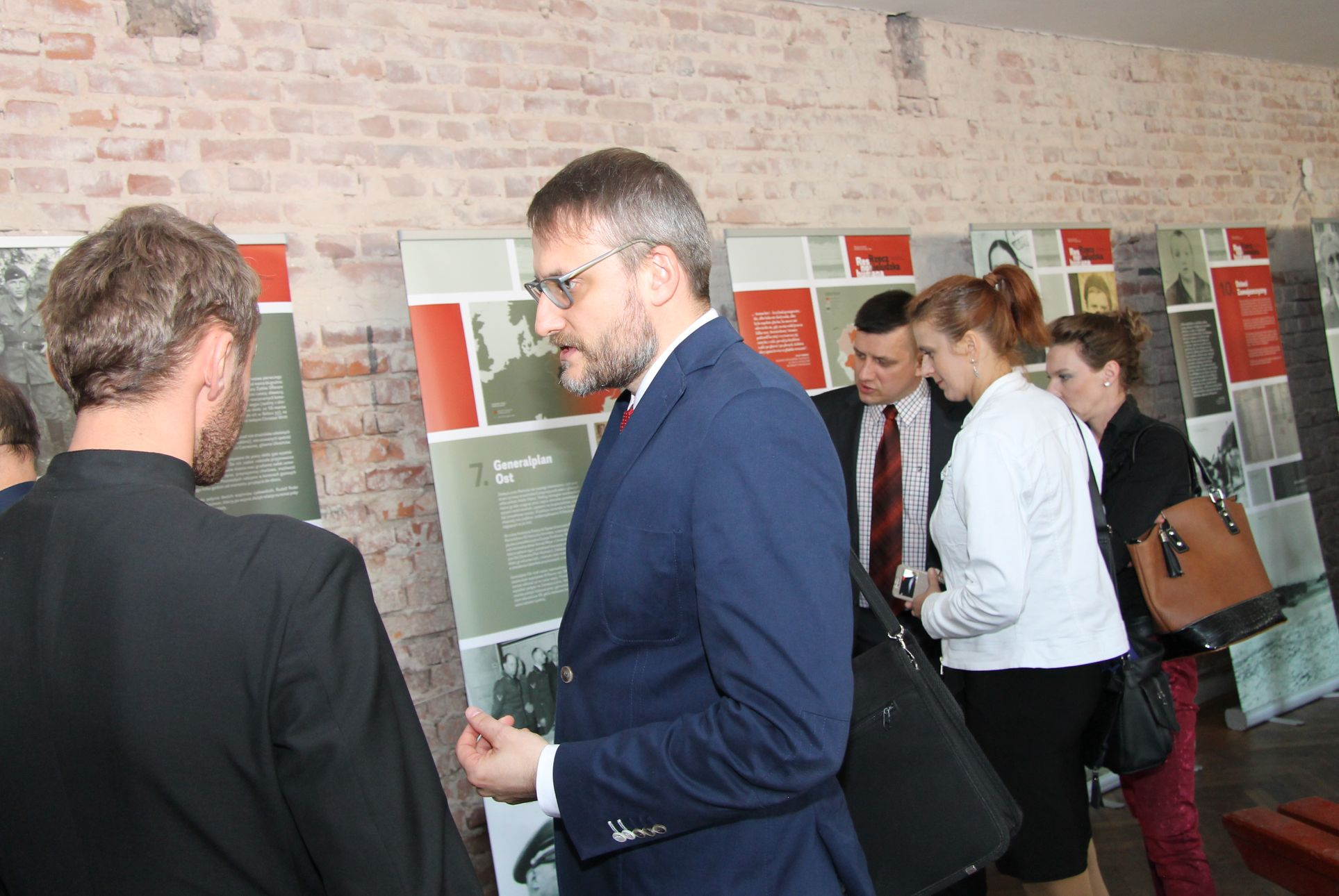
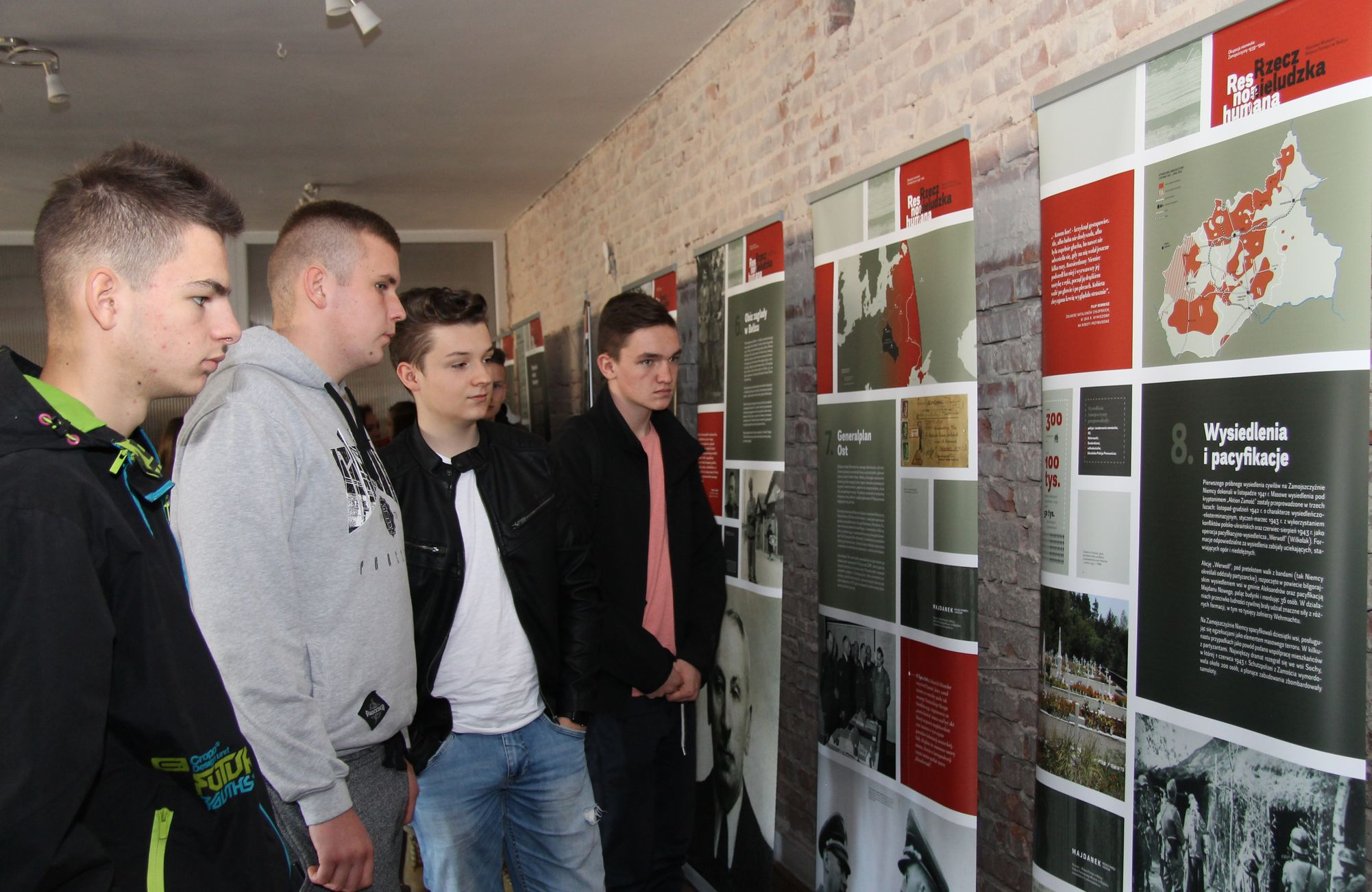
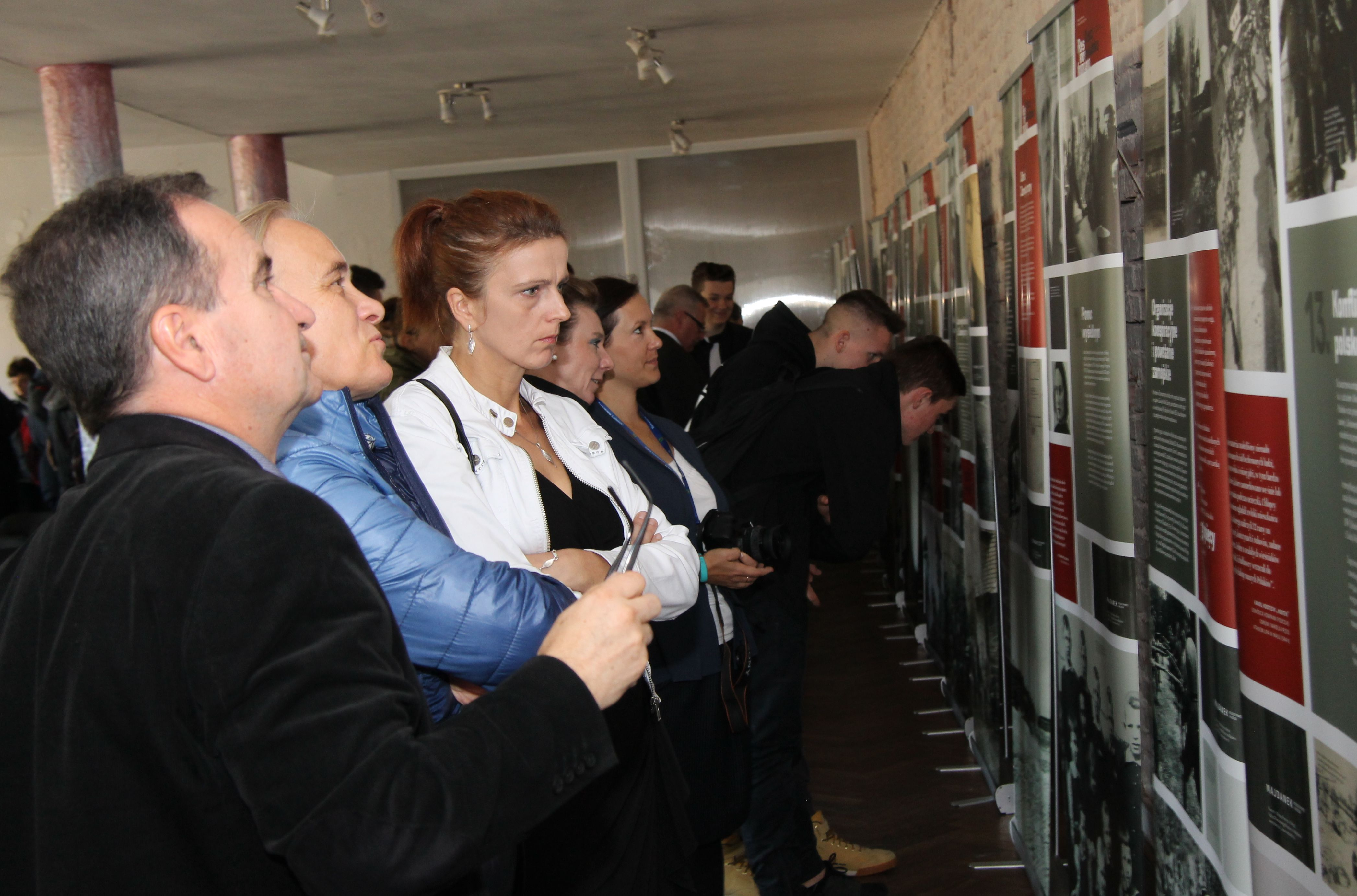
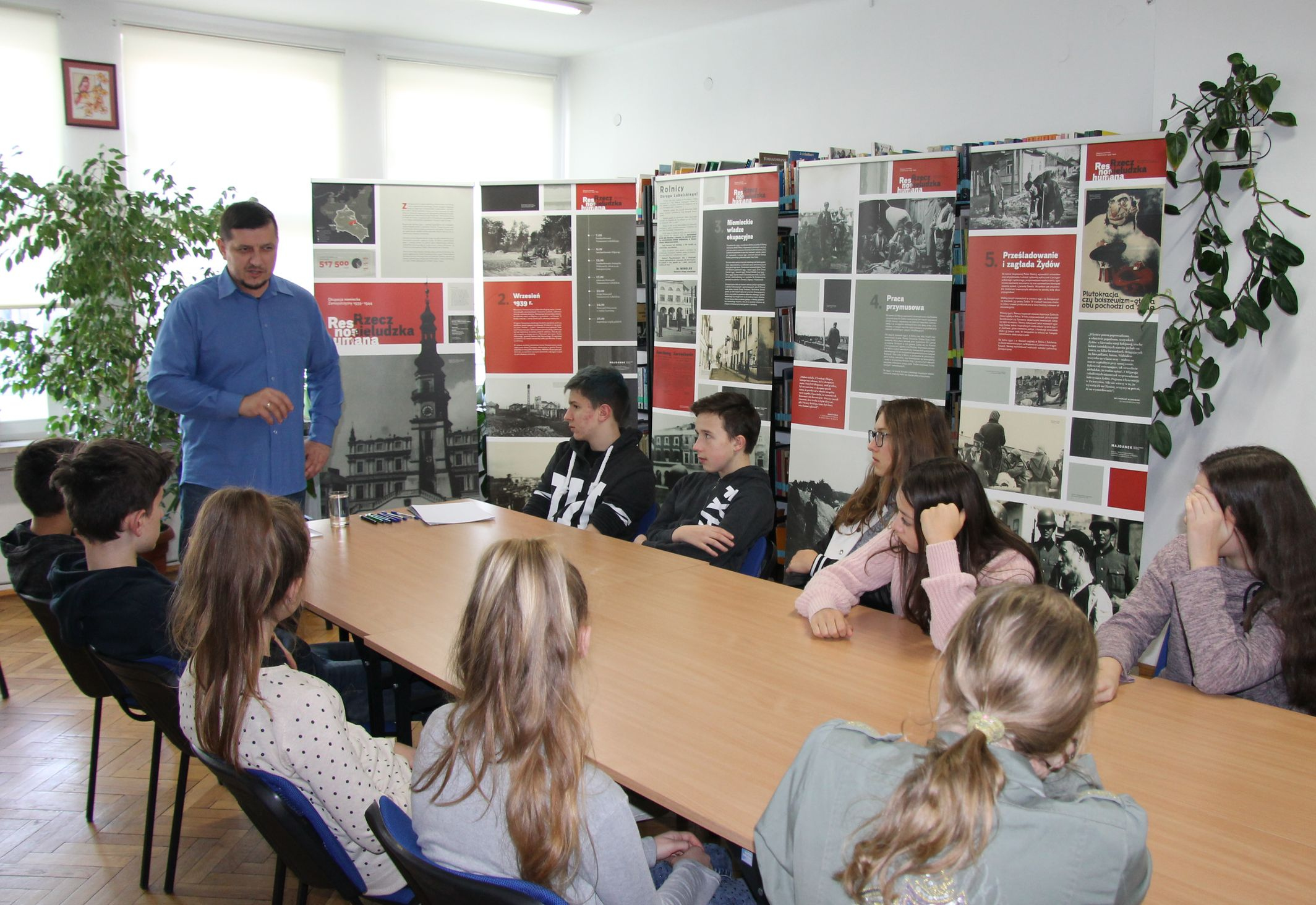
The exhibition presents the fate of the inhabitants of the Zamość region during the German occupation between 1939 and 1944. The region, comprising the Biłgoraj, Hrubieszów, Tomaszów and Zamość counties, was incorporated into the Nazi plans for the colonisation and Germanisation of Central and Eastern Europe. The events presented in the exhibition illustrate the consequences of the occupiers’ criminal policies – the terror of the German administration, the displacement of the local population, the extermination of Jews, and the resistance of the region’s inhabitants. The occupation ended in July 1944 with the advance of the Red Army.

Important information

Temporary exhibitionArchival
  • Exhibition date:02.10.2017 - 12.01.2018
  • Scenario:Tomasz Hanejko, Jarosław Joniec
  • Language Version:Polish
  • Artistic design:Izabela Tomasiewicz
  • Stylistic editing and proofreading of texts:Dorota Niedziałkowska

Beginning of the Occupation and the System of Terror

The war reached the Zamość region as early as September 1939. Bombing raids destroyed towns and villages – including Tomaszów Lubelski, Biłgoraj and Frampol. The area around Tomaszów Lubelski was the scene of some of the fiercest combat of the September Campaign.

Following the surrender of Polish troops, the region came under German occupation and was incorporated into the General Government. Harsh regulations, compulsory labour and a system of repression were introduced. The death penalty was imposed, among other things, for possession of radios or weapons, or for activities deemed to be sabotage against the occupier.
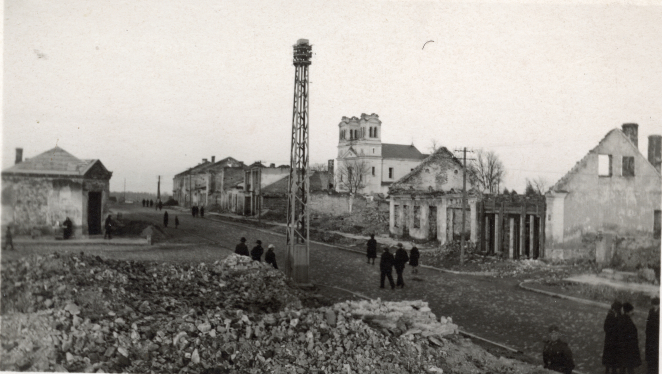
The market square in Biłgoraj, devastated following the fighting in September 1939; the Church of the Assumption of the Blessed Virgin Mary can be seen in the background
VIEW OF THE MARKET SQUARE AND THE CHURCH OF THE ASSUMPTION OF THE BLESSED VIRGIN MARY IN BIŁGORAJ. BIŁGORAJ WAS ONE OF THE MOST DESTROYED COUNTY TOWNS IN THE LUBLIN VOIVODESHIP IN SEPTEMBER 1939

Persecution and Extermination of Jews

Anti-Jewish legislation was introduced in occupied Poland, which excluded Jews from social and economic life. Ghettos were established in towns and cities, and in 1942 deportations to extermination camps began.

The camp at Bełżec was the first extermination camp established as part of operation ‘Reinhardt’. Between March and December 1942, the Nazis murdered over 434,000 Jews there. At the same time, numerous forced-labour camps were established in the Lublin District, where prisoners were exploited for hard labour.

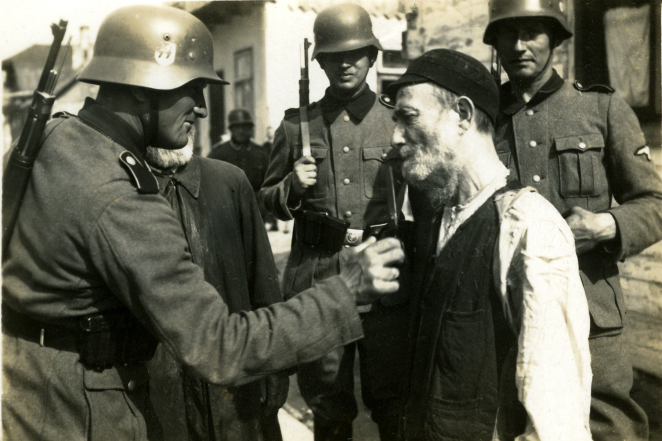
German soldiers surround an elderly Jewish man. One of the soldiers is cutting off his beard.
German soldiers are harassing Jewish residents of the Zamość region.

Displacements and the Inhabitants’ Fate

The Zamość region became the site of the Generalplan Ost colonisation scheme. Between 1942 and 1943, the Germans conducted the ‘Aktion Zamość’ deportation operation, during which hundreds of villages were pacified and tens of thousands of residents were forced to leave their homes.

The population was sent to transit, forced labour, and concentration camps. Children suffered a particularly tragic fate - many were separated from their parents and deported to the Third Reich for the purpose of Germanisation, whilst others ended up in camps or died as a result of diseases and starvation. German settlers were brought in to replace the displaced Poles.

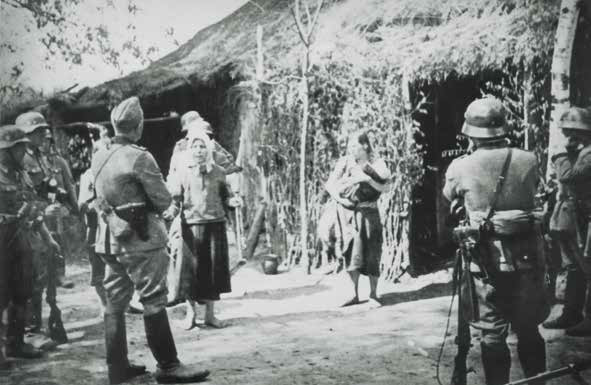
A black-and-white photograph. In the yard in front of a thatched cottage in the countryside stands a group of armed German soldiers in helmets and uniforms. Among them are civilians, including a barefoot woman wearing a headscarf and another woman holding a small child in her arms
DISPLACEMENT OPERATION IN THE BIŁGORAJ COUNTY, SUMMER 1943
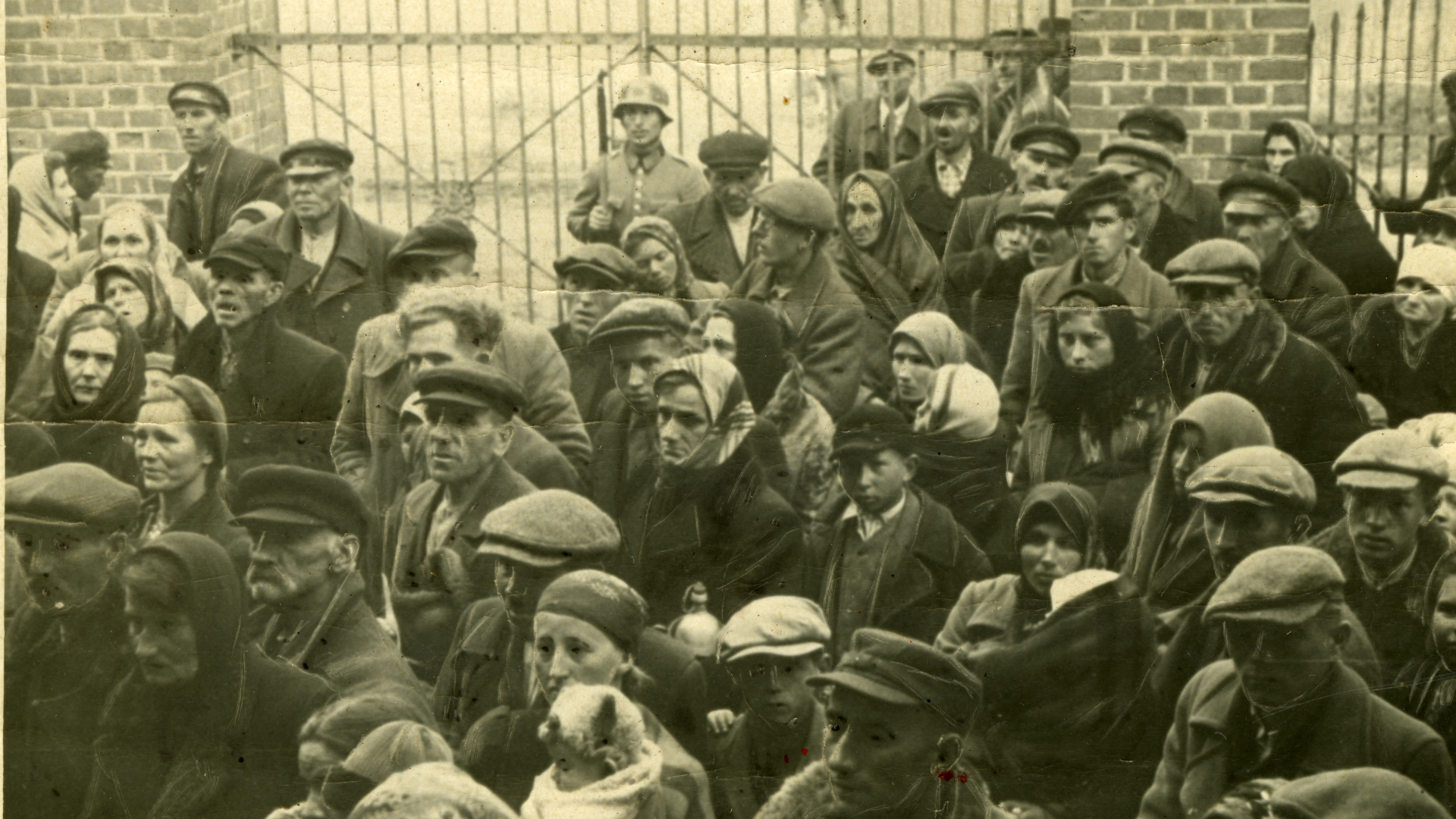
An archive black-and-white photograph showing a crowd of civilians during a deportation operation. In the foreground, people are crowded together, wearing coats, flat caps and headscarves, their faces betraying anxiety and exhaustion. In the background, in front of a metal fence, the silhouette of an armed German soldier can be seen, keeping watch over the crowd.
Displaced population of the Biłgoraj county on the grounds of the local prison

Resistance and Remembrance

Underground organisations operated in the Zamość region, primarily the Home Army and the Peasant Battalions. Partisan units fought against the occupiers, protected the local population and organised acts of sabotage. The scale of resistance was so great that these events came to be known as the Zamość Uprising.

One of the most important memorial sites associated with the occupation is the Zamość Rotunda prison and the site of the execution of thousands of people. Today, it serves as a reminder of the victims of German terror and of the region’s history during the World War II.

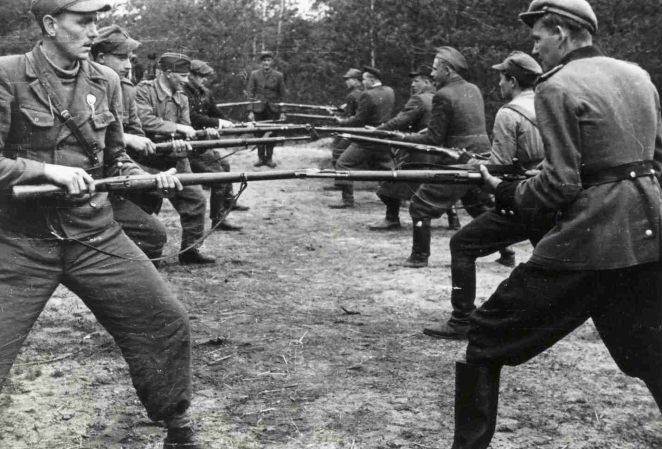
A black-and-white photograph depicting partisan training in the Biłgoraj County. In a forest clearing, two groups of men in uniform stand facing each other with their legs apart, practising hand-to-hand combat. Each of them is holding a rifle with a bayonet fixed to it with both hands, aiming at their opponent.
PARTISAN TRAINING IN THE BIŁGORAJ COUNTY
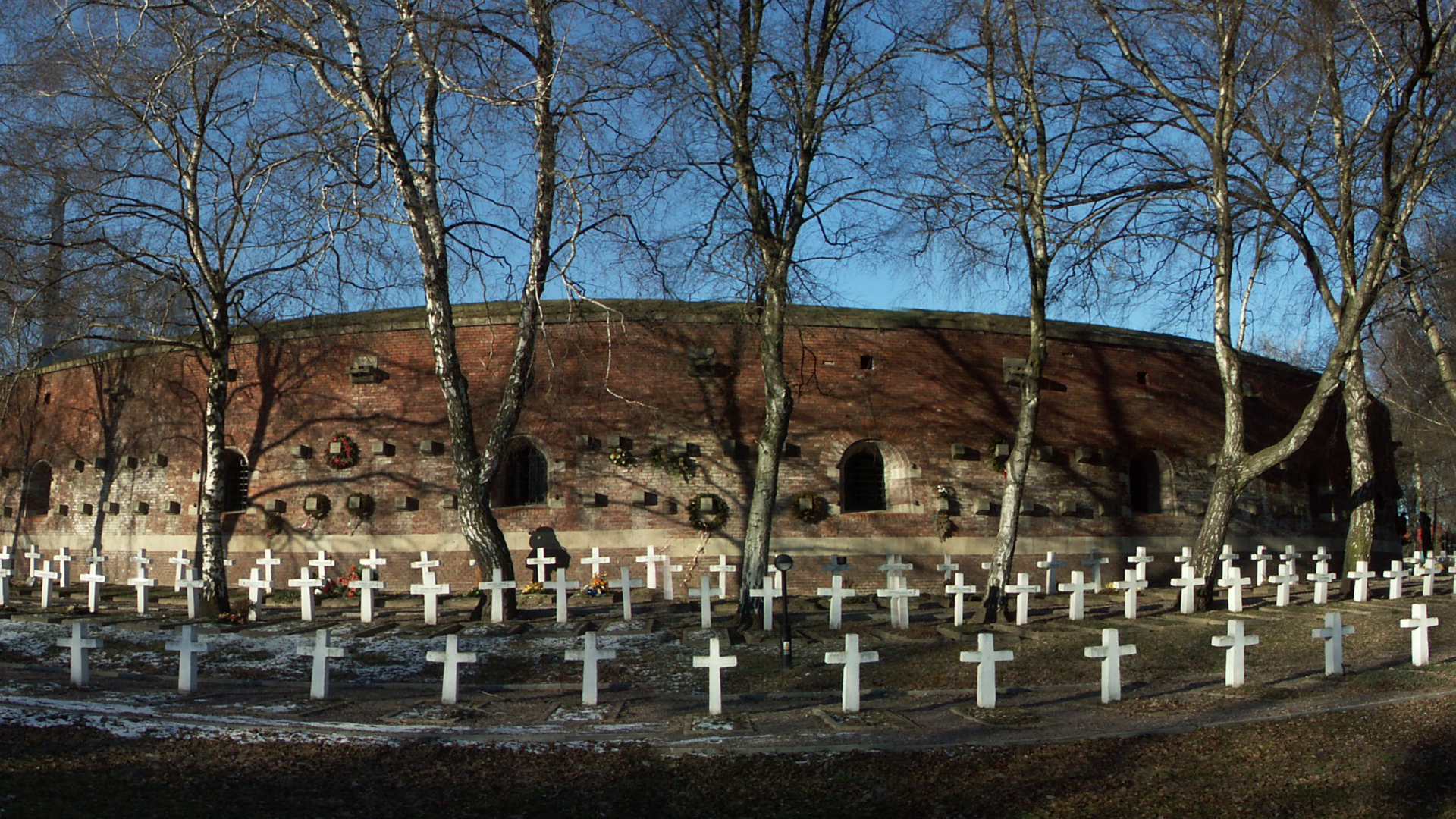
The panorama shows the Zamość Rotunda – a circular brick defensive structure which served as a place of execution during the Second World War. In the foreground, surrounding the monumental dark-brick walls, lies a cemetery with rows of simple white crosses standing on grassy ground. Tall, leafless birch trees grow amongst the graves.
PANORAMA OF THE ZAMOŚĆ ROTUNDA

Mobile Exhibition

The exhibition can be rented free of charge. For further details, please contact: (+48) 84 665 25 10.