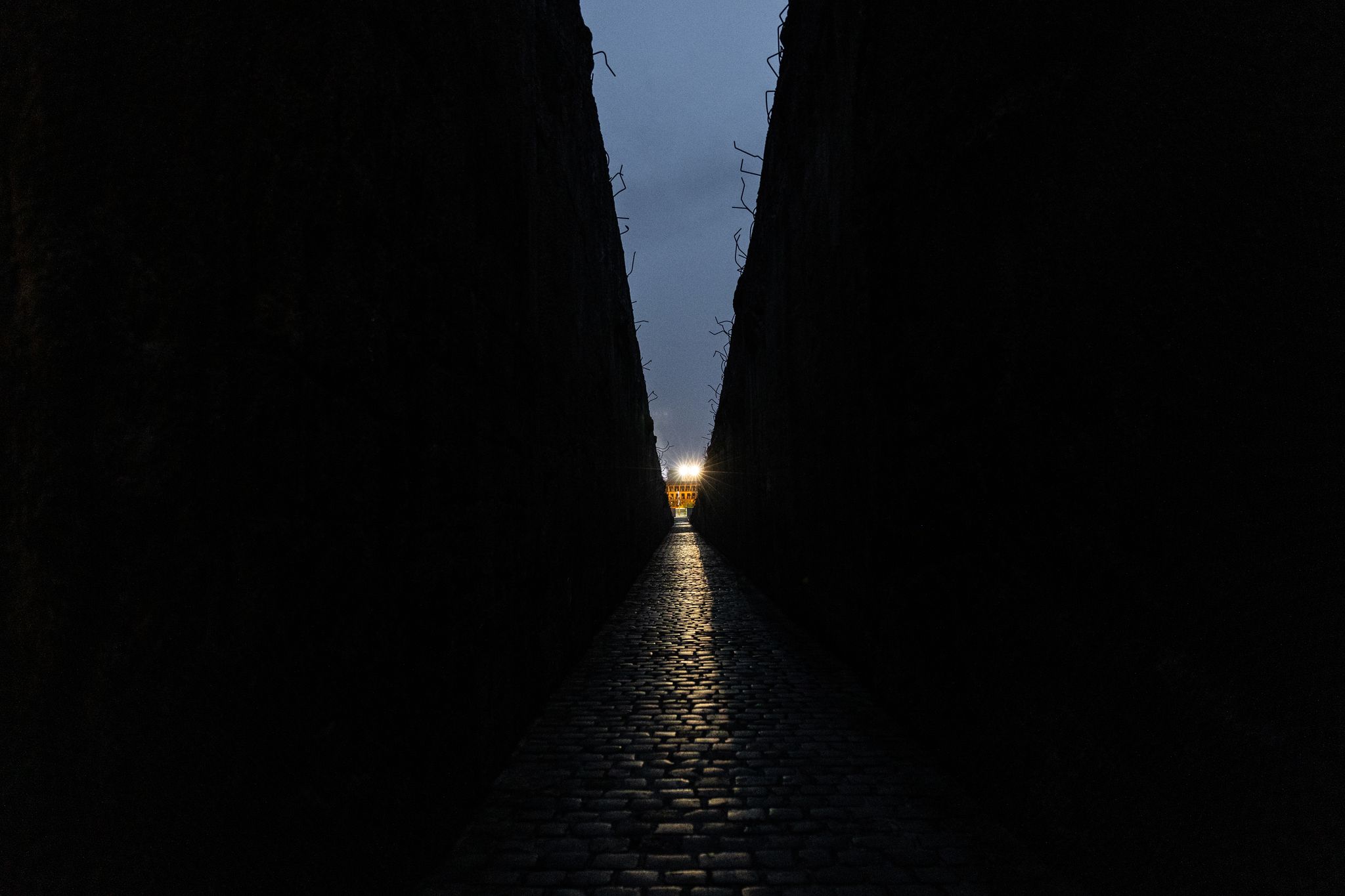
The sculpture-monument spatial design in Bełżec is a successful attempt to reshape the former death camp area into a full-scale commemoration. The project was created sculptors Andrzej Sołyga, Marcin Roszczyk and Zdzisław Pidek in cooperation with the architect Monika Chylińska. The Museum and Memorial in Bełżec was opened on 3 June 2004.
Commemoration
Symbolic Railway Ramp
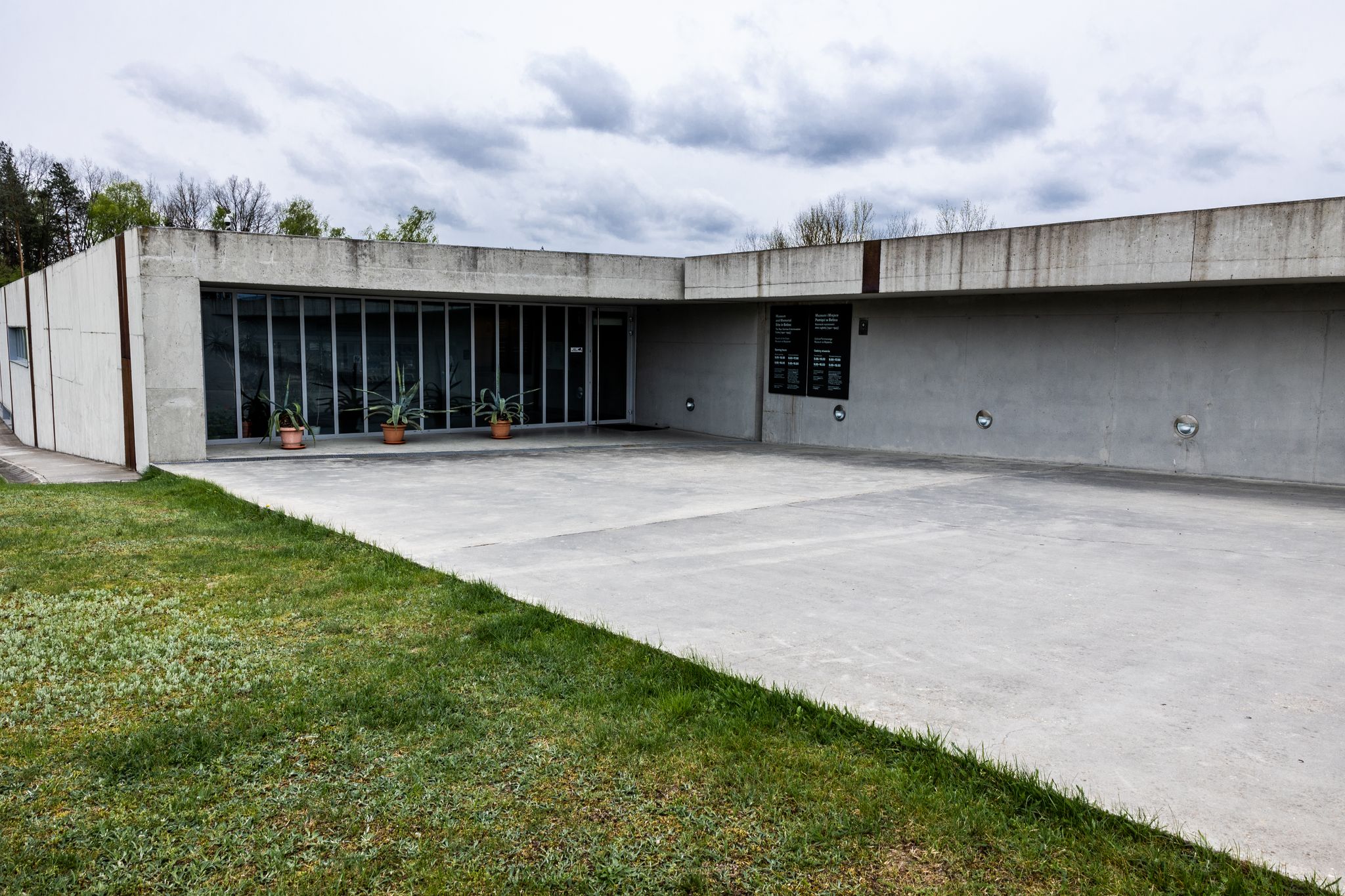
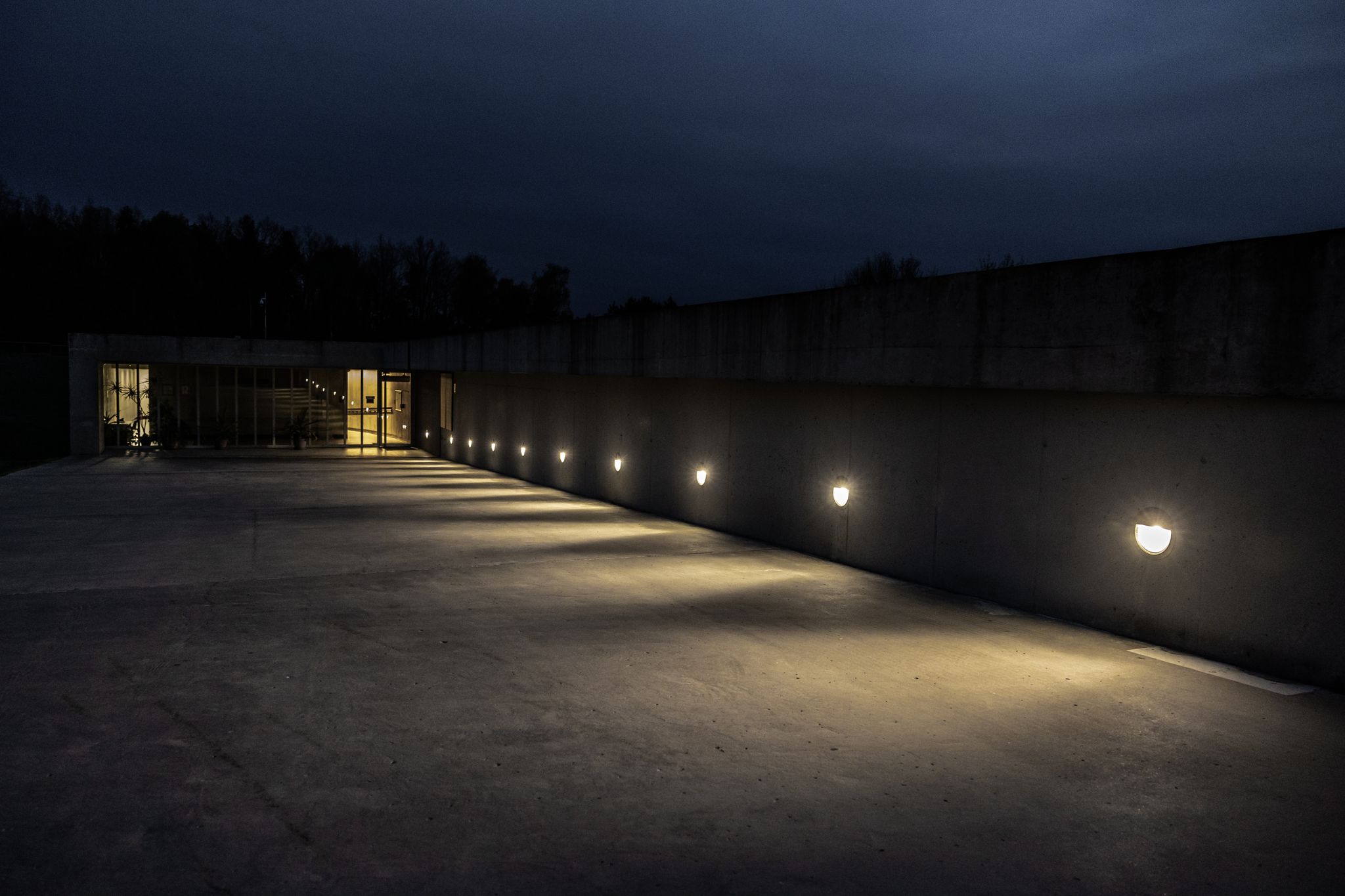
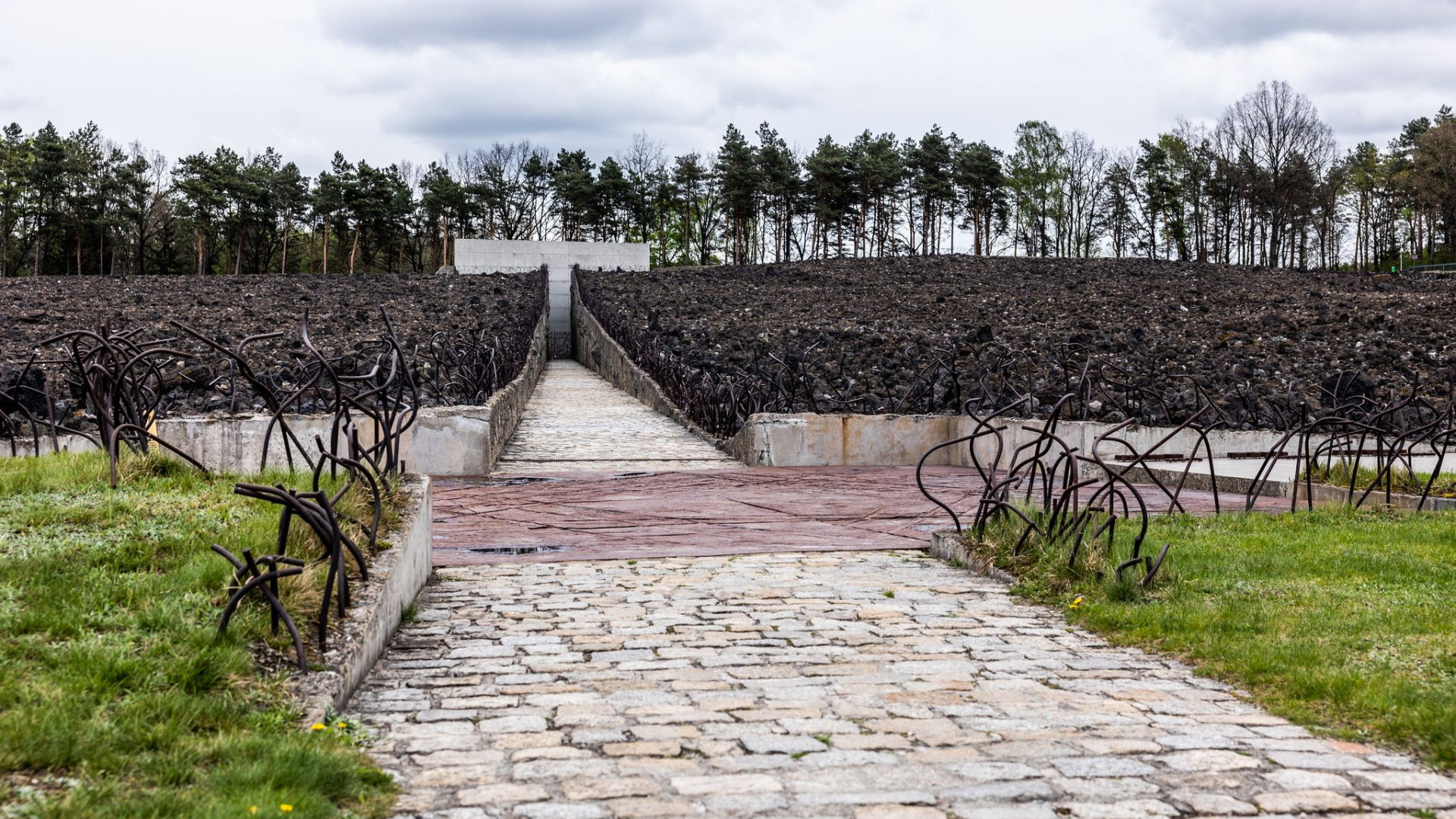
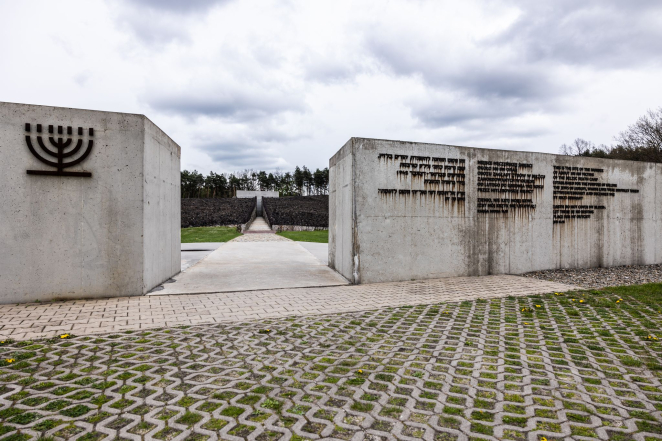
Upon crossing the entrance to the memorial grounds, the visitors walk onto a concrete path, which symbolises the railway ramp – the exact spot where trains bringing deportees arrived. The Museum building serves as its extension – it has the shape a concrete block divided with cast-iron abutments. Together with the enclosing concrete wall it resembles freight cars.
Railway Tracks
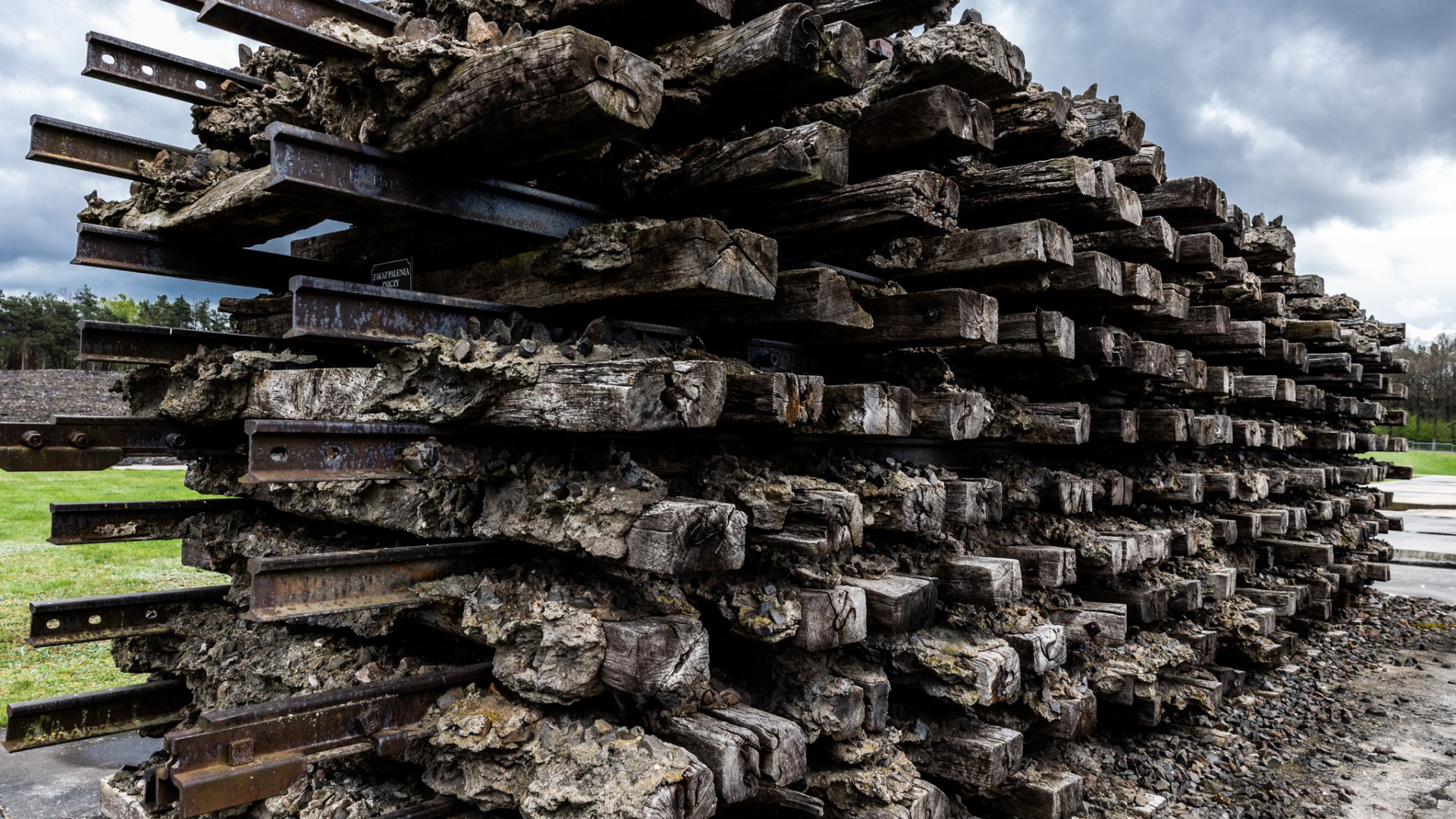
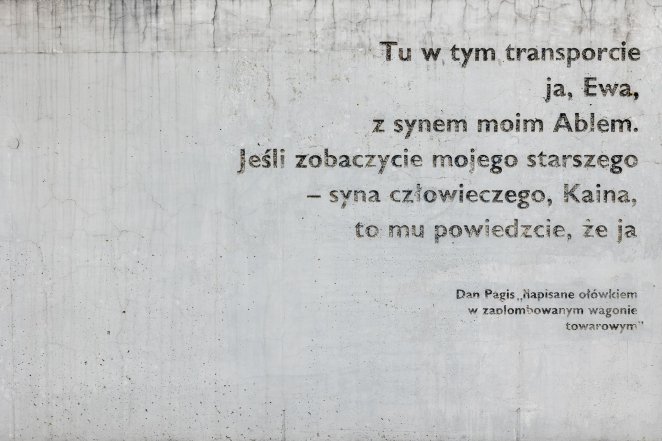
Sculptural composition is also implemented into the ramp area. It is made of disassembled railway parts, concrete, and stones. Its size is the exact reflection of one freight car’s measurements – one that was used in the deportations of Jews to the extermination camps. Simultaneously, this form alludes to the pyres made of railway parts and used in the incineration of the victims’ bodies. At the end of the wall, in the spot where the main camp gate used to be, a fragment of a poem “Written in Pencil in the Sealed Railway Car” created by the Israeli artist Dan Pagis is engraved. The passage reads: “Here in this carload I, Eve, with my son Abel. If you see my older boy, Cain, the son of man, tell him that I”.
Graveyard-Monument
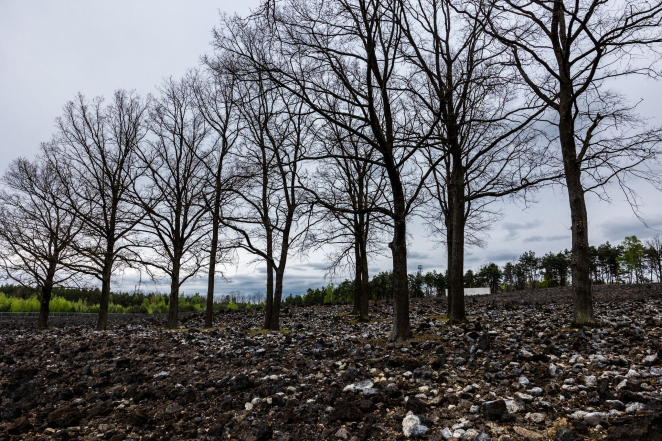
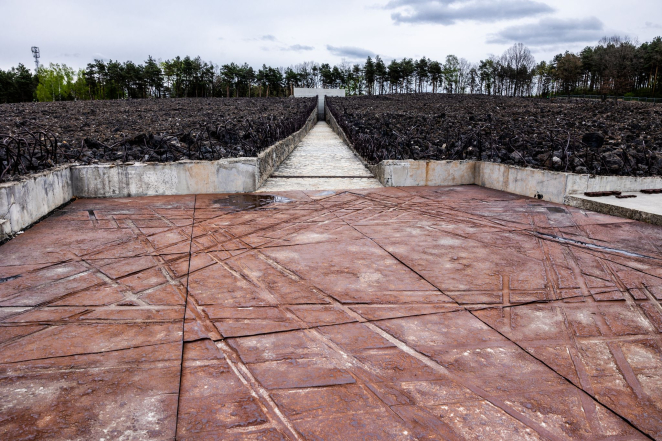
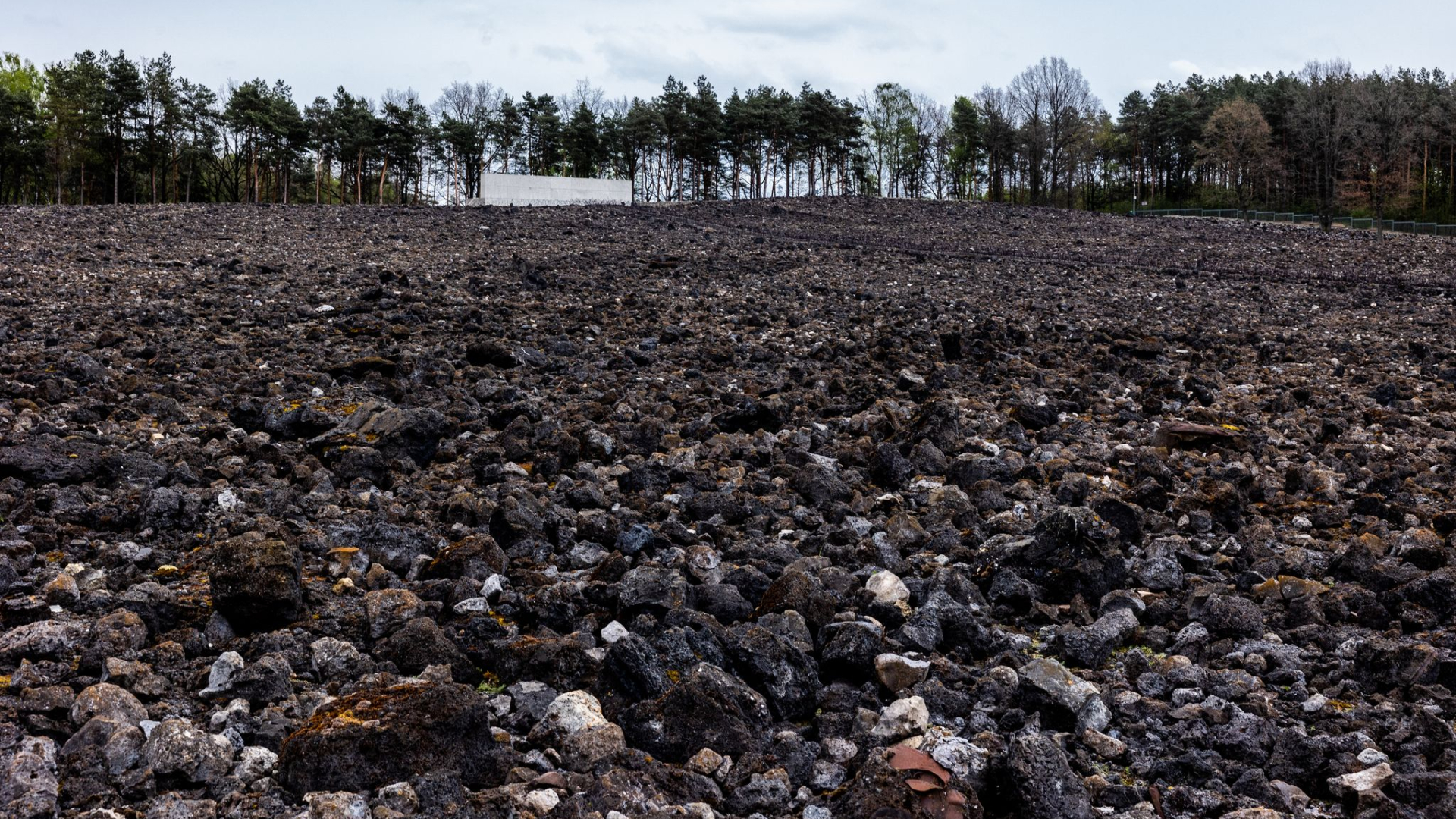
The borders of the graveyard-monument is marked with a passage within the concrete path – a rectangular cast-iron with a relief. Multiplied lines imprinted with freight car wheels form a Star of David. The graveyard-monument itself is the heart of the entire commemoration. The vast area of the former death camp hill is covered with a specially combined material made of smelter gravel, ash, and depleted soil. Increasing gradation and darker colouring of the mounds indicate the areas in the immediate vicinity of the gas chamber location where the mass graves have been identified.
Rift
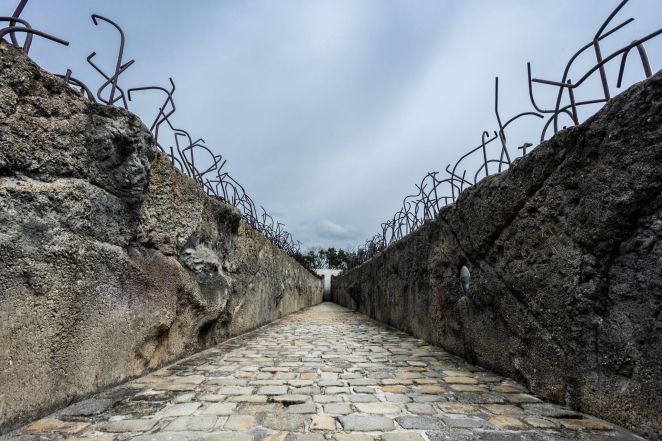
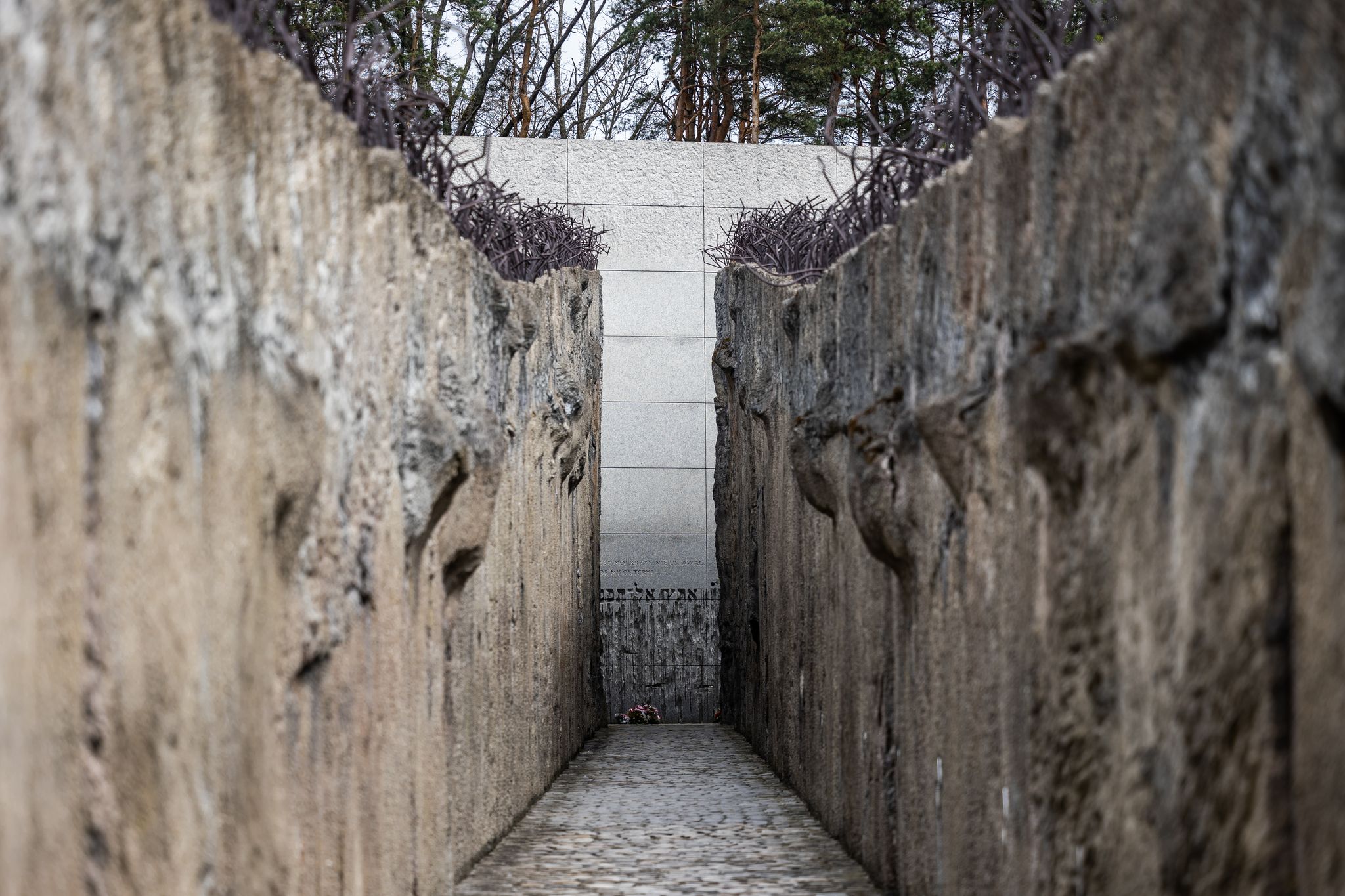
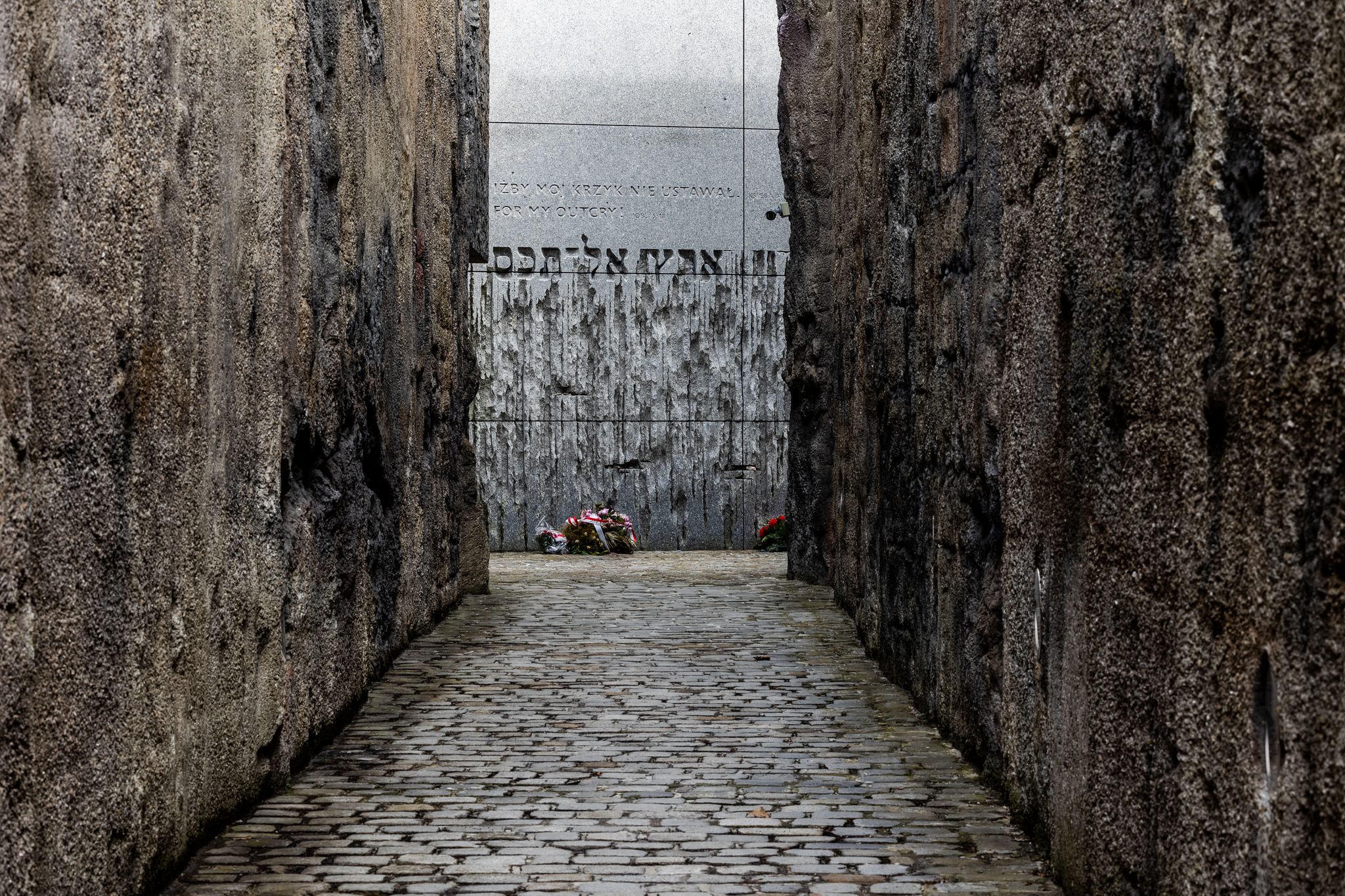
The visitors continue through the graveyard hill along a path that is enclosed with ascending slopes protected with concrete walls eventually reaching the height of 11 metres. They are irregularly topped with twisted reinforcing rods. Those measures create the illusion of descending underground as the hill rises above the visitors’ heads.
Ohel Niche
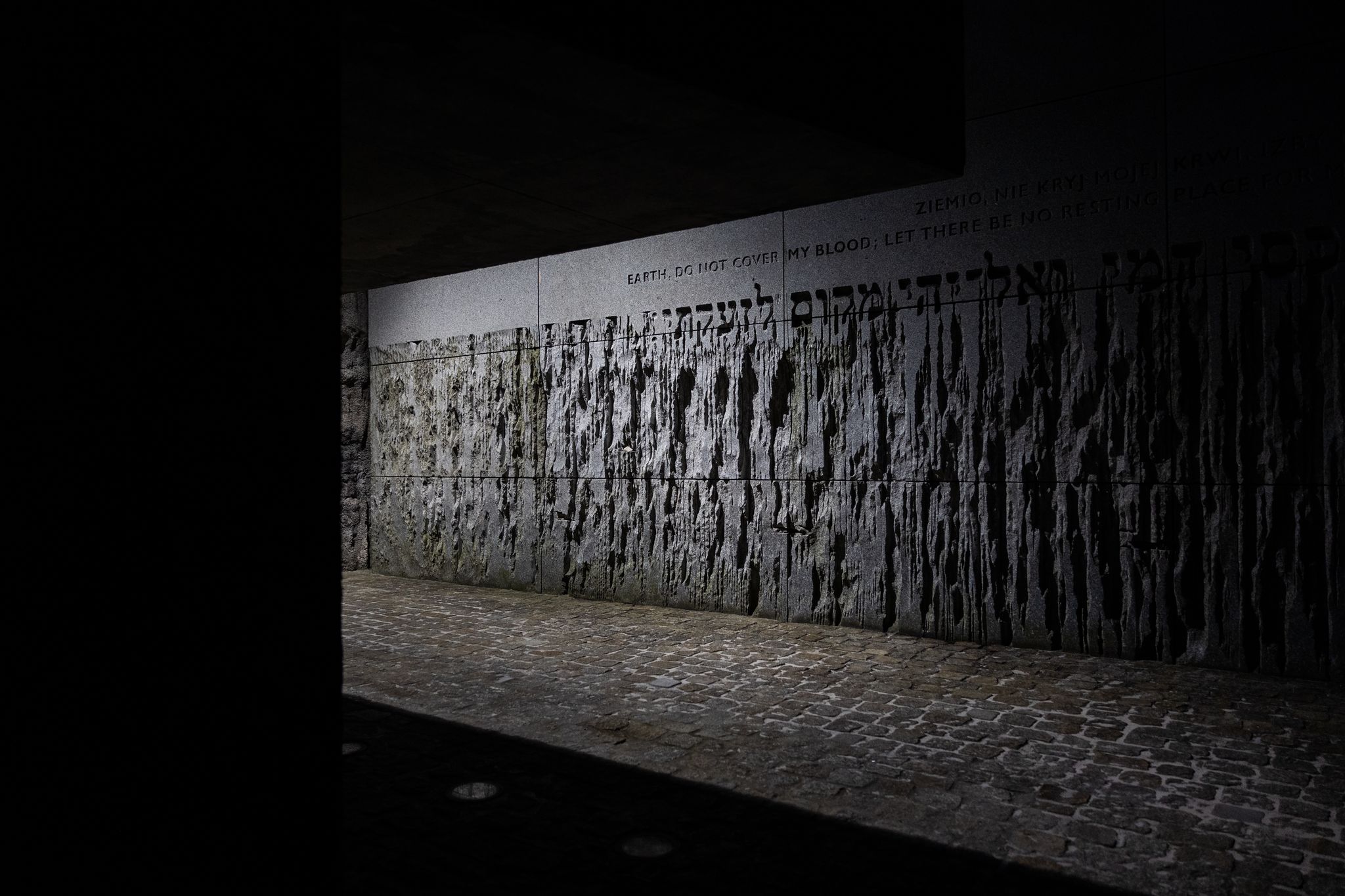
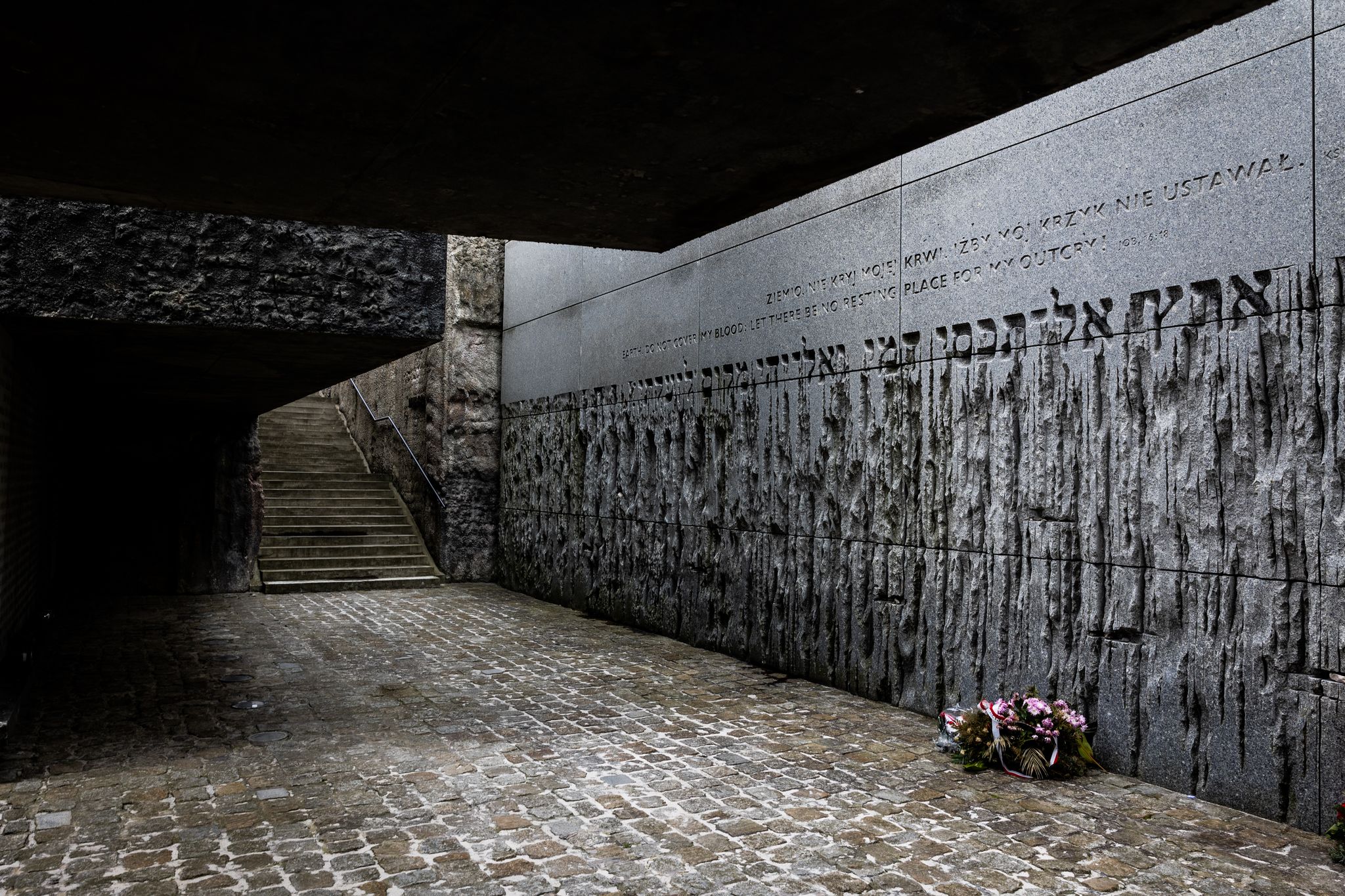
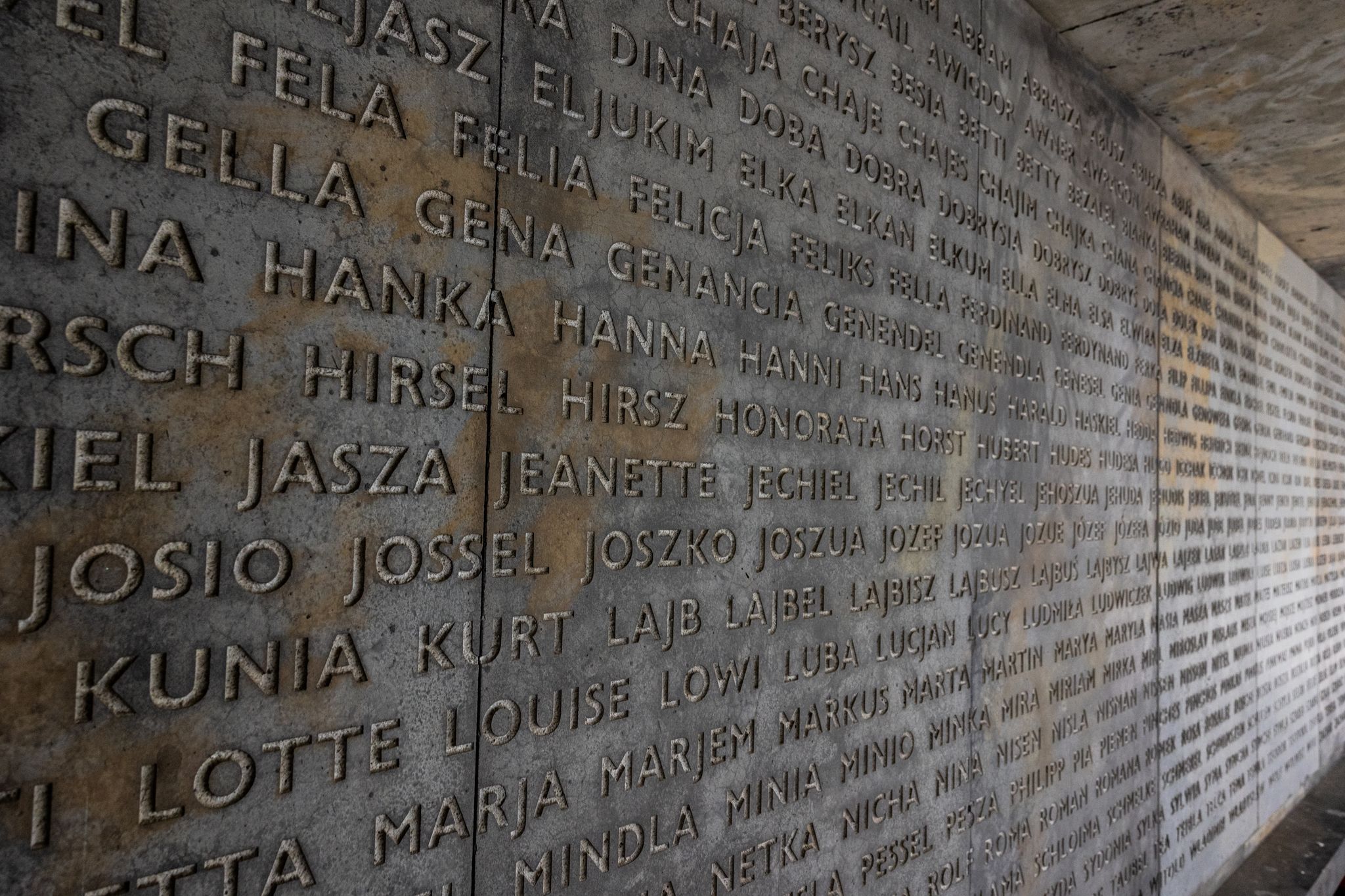
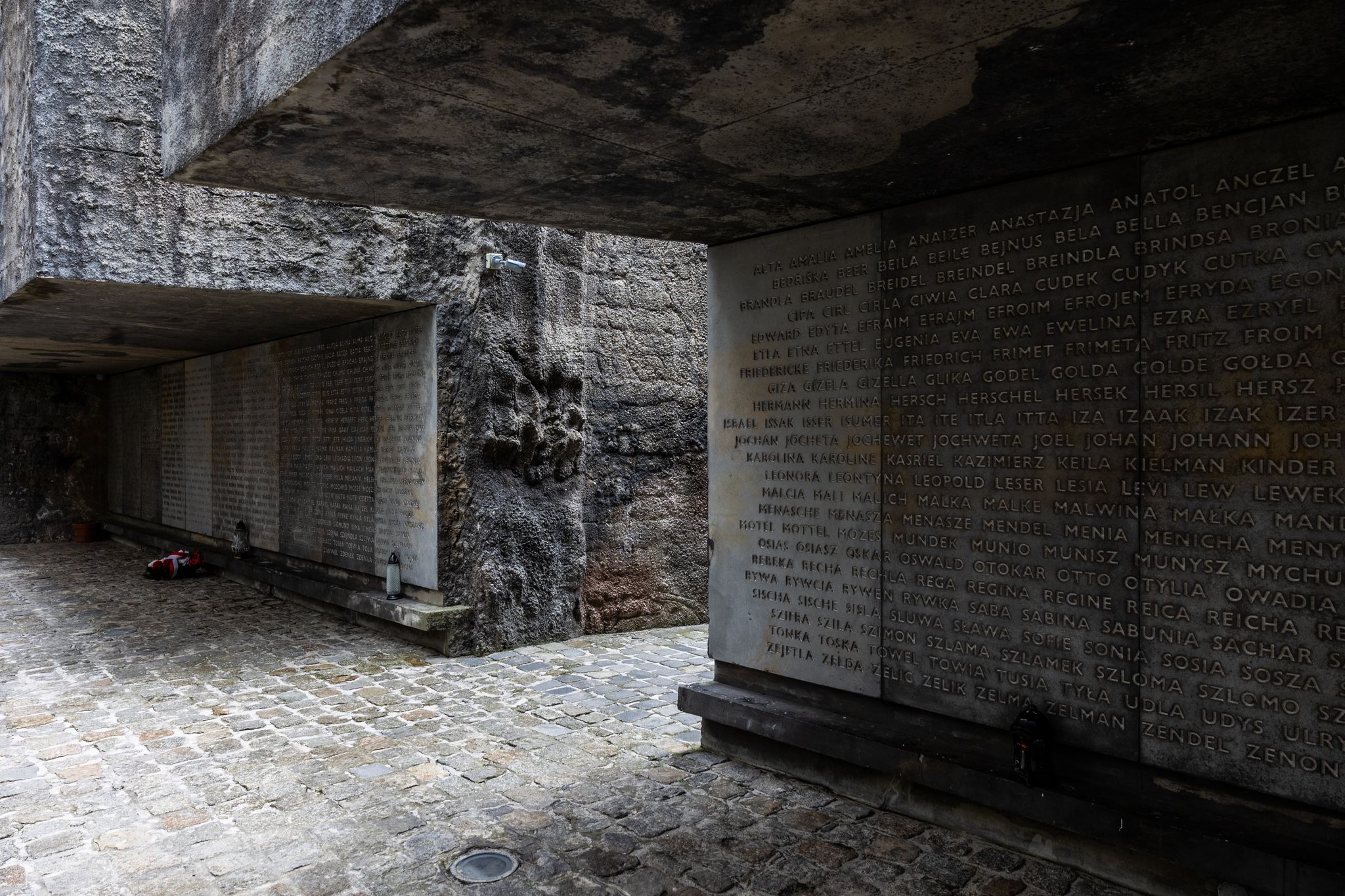
The rift-passage ends with a granite wall engraved with the passage from the Book of Job: “Earth do not cover my blood: let there be no resting place for my outcry.” Below it there lies the Ohel Niche, where visitors can pay homage to the victims. The term Ohel refers to the type of Jewish tomb-chapel of a cuboid shape. In the Bełżec memorial it has the form of an architectural niche. Its enclosing polished walls bear stone tablets with an alphabetic list of Jewish names. It serves as a reminder about the fate of each and every victim. The perpetrators made not transport lists, so the surnames of deportees – especially of the Polish Jews – are mostly unknown.
Deportations Timeline
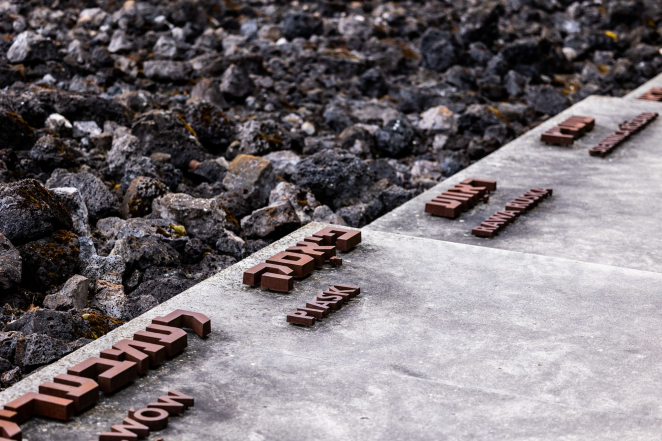
From the Ohel Niche the visitors can return to the surface of the hill by climbing the stairs over both sides of the stone wall. There, they reach the path enclosing the graveyard. Along its course the names of cities and towns are placed in Yiddish and Polish – places from where transports of victims were sent to Bełżec. Additionally, names of foreign cities from where Jews were displaced into Lublin region are placed. They are written in Hebrew and the respective foreign language. Following this path allows one to visualise the scale of deportations and see the crime scene itself from a different perspective.
Trees
In the spring of 1943, the garrison of SS-Sonderkommando Belzec tried to eradicate all traces of the mass murder crime, levelled the camp structures to the ground and planted trees on the ploughed grounds. When the monument was being constructed, most of those trees were cut. However, a certain number of pre-war oaks growing in the south-eastern part of the memorial remained as “silent witnesses” of the Holocaust crime.